
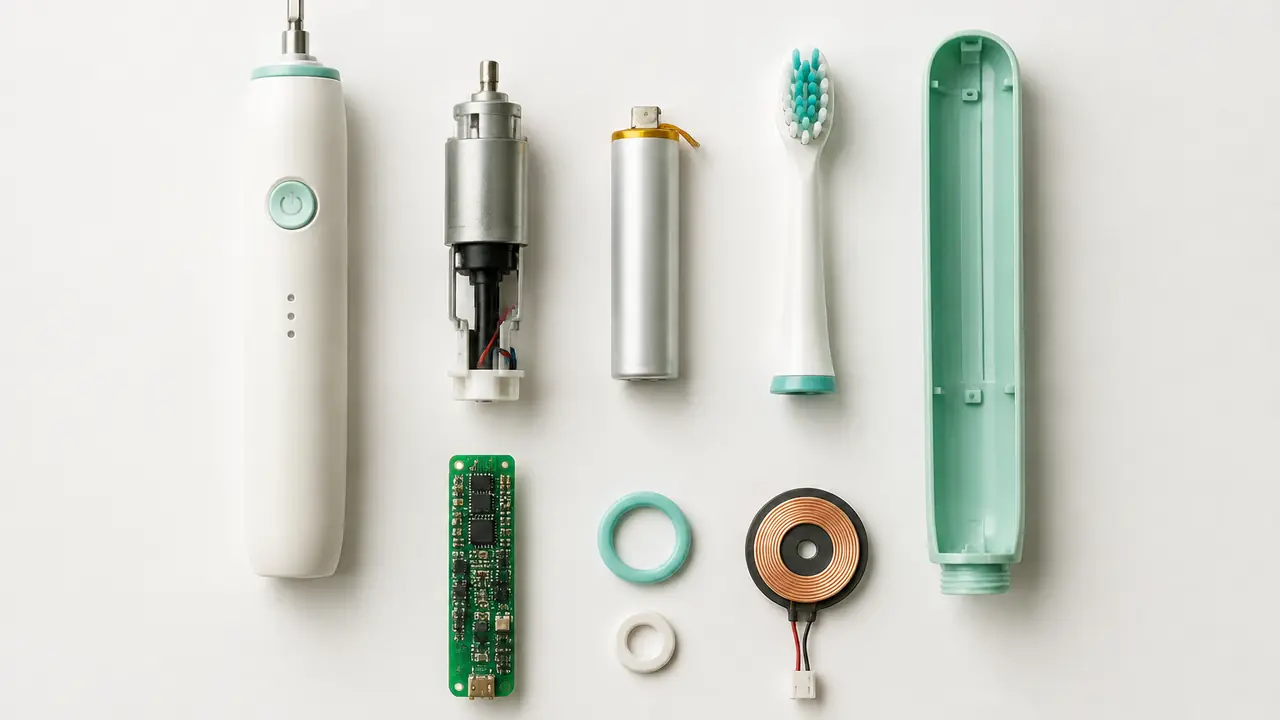
The cell decides the program
Choose the cell and much of the program chooses itself. Runtime follows capacity, so the typical rechargeable band of 3.7 V and 800-1,400 mAh delivers the familiar 14-30 days of use at two two-minute sessions per day, while smaller travel handles at 500-1,000 mAh trade runtime for size. Charging hardware follows the cell: a rechargeable pack implies a dock or a cable, its protection board, and the sealing that comes with them. Paperwork follows hardest of all - lithium cells carry transport and safety tests that disposable formats avoid entirely. None of these decisions is reversible late in development without cost, which is why the desk asks about the cell before the colors.
The choice also draws the market map. Rechargeable lithium models suit premium and mid tiers in markets with mature charging habits; AAA models suit entry price bands, gifting channels and markets where outlets or charging routines are unreliable. Most assortments end up carrying both, at different shelf positions, from the same plant. Where a line sits between the two is a channel decision as much as an engineering one, and it deserves settling before quotations, because the cell choice moves the bill of materials more than any finish decision on the shell.
Cylindrical lithium cells
The cylindrical format - the 18650-type steel can most people picture when they hear lithium-ion - is the older and more standardized route. Its virtues are robustness and uniformity: a steel-wrapped cylinder tolerates handling, stacks predictably in a holder, and comes from a deep supplier base with mature quality systems. In handles it suits thicker shells, where the diameter is easy to accommodate, and programs that prioritize proven, commodity-style supply. The trade-off is geometry: a cylinder fills space inefficiently in a slim handle, which is why the slimmest sonic designs rarely use it.
Polymer packs
Polymer cells trade the steel can for a flat pouch, and the pouch's freedom of shape is exactly what slim handles need. A pack can be thin, wide, L-shaped within limits, and sized to the millilitres of space left above the motor - which is why most flagship sonic handles carry polymer. Electrically it is the same 3.7 V chemistry family and it takes the same protection circuitry; the differences are mechanical and commercial. Pouches are lighter and shape-friendly but more sensitive to handling and puncture, so plants mount them with fixturing and insulation discipline, and buyers should ask how packs are secured and protected inside the shell. Capacity pricing and supplier depth differ from cylindrical supply, and both formats are procured by the thousand with their test documents attached.
The AAA route
The disposable format keeps the lithium questions out of the program entirely. AAA models - two cells in most handles, single-AA in a few - run the entry band at 7,000-12,000 strokes per minute with one or two modes, and they sell on a different promise: buy it, drop cells in, use it for months. A set of cells typically lasts around 90 days in twice-daily use, a figure the desk treats as the common reference and confirms against each model's own report. There is no charger in the box, no dock to source, no UN 38.3 file for the shipment, and air freight loses its lithium complications. The costs are the user's: cells to buy and discard, lower stroke counts, and no place in a premium assortment. The positioning trade is laid out directly in battery vs rechargeable toothbrushes.
The formats compared
| Format | Typical figures | Paperwork | Best fit |
|---|---|---|---|
| Cylindrical Li-ion | 3.7 V, 800-1,400 mAh | UN 38.3 + IEC 62133-2 | Full-size rechargeable handles |
| Polymer pack | 3.7 V, 500-1,400 mAh, flat or shaped | UN 38.3 + IEC 62133-2 | Slim and flagship sonic handles |
| AAA / AA | 2xAAA or 1xAA; 7,000-12,000 strokes/min | None for lithium | Entry price band, travel and gifting |
Runtimes across the rechargeable formats sit in the 14-30 day band, with travel models quoting 20-60 days because they are used less often; what sets the number, and how to read claims about it, is in battery life explained.
Tests and paperwork: UN 38.3 and IEC 62133-2
Two test regimes attach to lithium cells in this category. UN 38.3 is the transport test - altitude, thermal, vibration, shock and the rest - required before a cell can ship by air or sea, and forwarders will refuse a lithium shipment without the file. IEC 62133-2 is the safety standard for lithium cells in portable applications, the document market authorities ask to see for the cell itself. Polymer cells take the same regime as cylindrical ones. Reference certification cycles run about 2-3 weeks for UN 38.3, confirmed per project, and the appliance's own route - IEC/EN 60335-2-52 or UL 859 - proceeds in parallel rather than in sequence. The desk reviews the cell documents per project, because a handle datasheet and a cell datasheet are different documents from different suppliers, and both must exist before a shipment can move. The full battery-test picture is in UN 38.3 and IEC 62133 for toothbrush batteries.
Shipping and spares planning
Lithium follows the shipment. By air, cells travel under IATA rules with the UN 38.3 file attached; by sea, finished handles consolidate in FCL or LCL on the usual lanes - around 15-25 days to US West Coast ports and 30-45 to Europe - and the lithium file travels with the paperwork. Program structure can simplify any of it: some buyers ship handles without cells installed, some source cells regionally near the destination market, and AAA programs sidestep the question altogether. Each route changes the customs and transport picture, so the desk confirms the chosen route in writing with the forwarder per order; the mechanics are summarized in shipping toothbrushes and the wider logistics layer on logistics and shipping.
Spares close the loop. The sealed pack inside a handle is a plant-level replacement, not a user-level one, so spare-pack planning is mostly about service inventory for warranty handling rather than a retail SKU. Reference minimums for cells and packs follow the by-the-thousand convention of component procurement, with timing on MOQ and lead time; a cell question - format, capacity band, paperwork route - can be attached to any brief through the quote form. The buyer-facing summary of all battery choices lives in the toothbrush battery guide.