
Why this is a compliance topic, not a copywriting one
Market regulators and platform reviewers have converged on the same position: environmental claims must be specific, substantiated and scoped. Unqualified phrases - blanket environmental virtue applied to a whole product - are the first thing reviewers strike, because they promise more than any document can support. For a buyer this changes the conversation with the plant from "can you make it greener" to "which properties can you evidence, per batch, on paper". The good news is that this category has real, documentable substance to work with: a repairable product architecture, material compliance testing that already exists for other reasons, and packaging decisions with traceable materials. The task is to claim those things precisely and nothing more.
What an electric toothbrush program can document
Four claim families survive contact with an evidence requirement, and each has a distinct document behind it.
| Claim family | What the plant provides | How it is worded |
|---|---|---|
| Recycled plastic content | Supplier documents stating the recycled share in named parts, per batch or lot | States the part, the share and the evidence basis - never the whole product |
| Repairability | Written spare-parts availability and a parts list for the product life | "Replacement heads and parts available for the life of the product" |
| Packaging materials | Material declarations for box and inserts; format documentation | Names the materials and their properties, without recovery promises |
| Material compliance | RoHS and REACH test reports per model | Compliance wording, kept separate from benefit wording |
The material-compliance row belongs in the table because it is often mistaken for an environmental claim: RoHS and REACH are substance-compliance regimes the program needs regardless, and their reports are evidence of conformity, not of benefit - the materials side is covered in the note on RoHS and REACH for toothbrush materials and on the compliance and certifications page.
Recycled content: stated, scoped, evidenced
Recycled plastic is the claim buyers ask for first, and the one that most needs narrowing. A documentable version has three parts: the named component (a shell, an inner tray, a collar body), the recycled share in that component as the supplier states it, and the batch-level documentation linking the statement to production lots. With those three in hand, wording writes itself: the program can say that a named part carries a stated recycled content share, evidenced per batch - and it cannot quietly promote that into a whole-product characterisation, which no document supports. Buyers should also expect the practical questions at sourcing: whether the recycled grade affects colour range, finish or drop performance in the affected parts, and whether supply is stable at the required share across seasons. Both are answerable with samples and supplier papers, which is why the desk routes recycled-content requests through the same verification path as any other specification: documents reviewed per project, every agreed figure confirmed in writing, and the wording locked to the evidence before print.
Repairability: the architecture argument
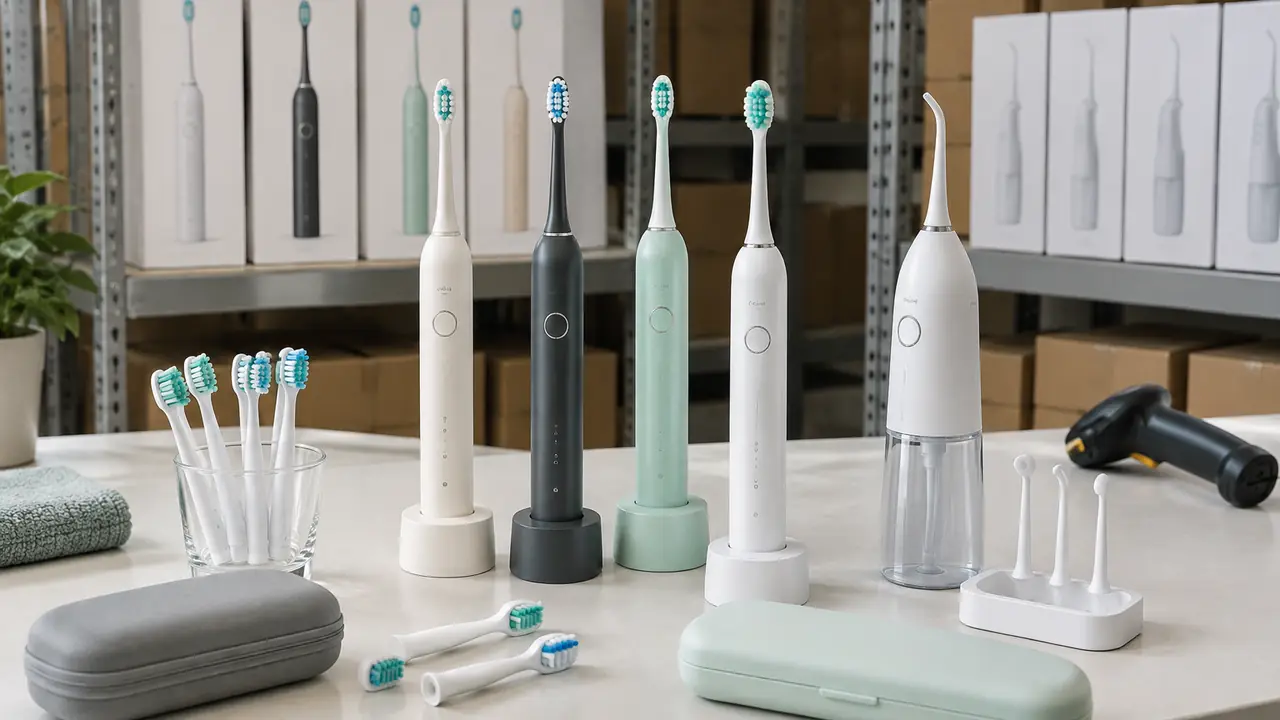
The strongest environmental statement in this category is structural and needs no chemistry at all: a powered toothbrush is designed so that the wearing part is replaced and the durable part is kept. Every head swap keeps the handle - with its motor, cell and shell - in service, which is the repairability logic of the product expressed in its own architecture. A program can strengthen and document that position: commit in writing to head availability for the product life, publish the compatibility statement so refills are findable, extend the same commitment to docks, cables and cases, and - on entry models - note that replaceable AAA cells keep a handle running without tools. The claim that results is concrete and defensible: replacement parts available for the life of the product, which is precisely what a repairability expectation asks for. The consumable economics of this architecture are set out on the replacement brush heads page, and the power-source trade-offs - rechargeable lithium against replaceable AAA - are compared in battery versus rechargeable; neither format is claimed as better for the planet, because no document in the file supports that comparison.
Packaging: the materials that can be named
Packaging is where claims drift furthest from evidence, and where discipline pays best. What can be documented: the materials in the box and inserts by name, their basis (for example a kraft carton with a stated recycled share, with supplier papers), and format facts - fewer laminated layers, a single-material carton, soy-based or water-based inks where the printer documents them. What cannot be documented honestly: recovery outcomes, because whether a carton is recycled depends on local systems the program does not control, so wording stays on materials and format rather than on what happens after disposal. Structural choices also carry the message without words: a right-sized carton, an insert that replaces foam, a print spec the packaging team can evidence. The print and structural options are set out on the packaging and retail boxes page, and the desk treats packaging material declarations as order documents - reviewed with the proof, on file with the specification.
Writing the claims: a word-level discipline
The drafting rules compress to a short list. Claim components, not products: the shell carries a stated recycled share, the program does not. Name the evidence in the wording: "per supplier documents", "per batch papers", and keep those papers with the order file. Keep compliance and benefit separate: RoHS and REACH are conformity statements, and environmental wording never borrows their authority. Scope time where the claim needs it: parts availability is claimed for the life of the product because that is what the written commitment covers. And delete every absolute: blanket environmental characterisations, unqualified purity language and recovery promises have no document behind them and are struck first by every reviewer that matters. Programs that follow these rules end up with fewer environmental words than their competitors - and every one of the words they keep will still be standing after an audit, which is the only version of this conversation worth having. Reference minimums and schedules for the underlying program, including the parts commitments that back repairability wording, are on MOQ and lead time, and a brief can be started through the quote form with the claim list attached for document matching. The component-level choices behind several of these claims are itemised under toothbrush components.