
Where part 2-52 sits in the 60335 family
IEC 60335-1 is the general standard for household and similar electrical appliances: the rulebook for insulation, enclosures, heating, moisture resistance and the abnormal conditions a product must survive. No finished product is tested against the general part alone, because the series expects each appliance category to carry a particular standard - a part 2 - that adapts the general rules to what that category actually is. IEC 60335-2-52 is the particular standard for electric oral hygiene appliances, and the current edition is dated 2021. Wherever the particular standard tightens, replaces or adds to a general requirement, part 2-52 wins; everything it does not touch falls back to 60335-1.
For a buyer, the practical meaning is structural: a credible safety file for an electric toothbrush names both documents. A report that cites only the general part, or a quotation that promises testing without naming the edition, is a signal to ask more questions before the program moves. The pairing is also why one laboratory visit can serve several product types - a handle, a U-shaped tray and a water flosser all live in the oral hygiene appliance family and share the same document architecture, which keeps multi-SKU lines tidier than buyers expect.
What the particular standard covers
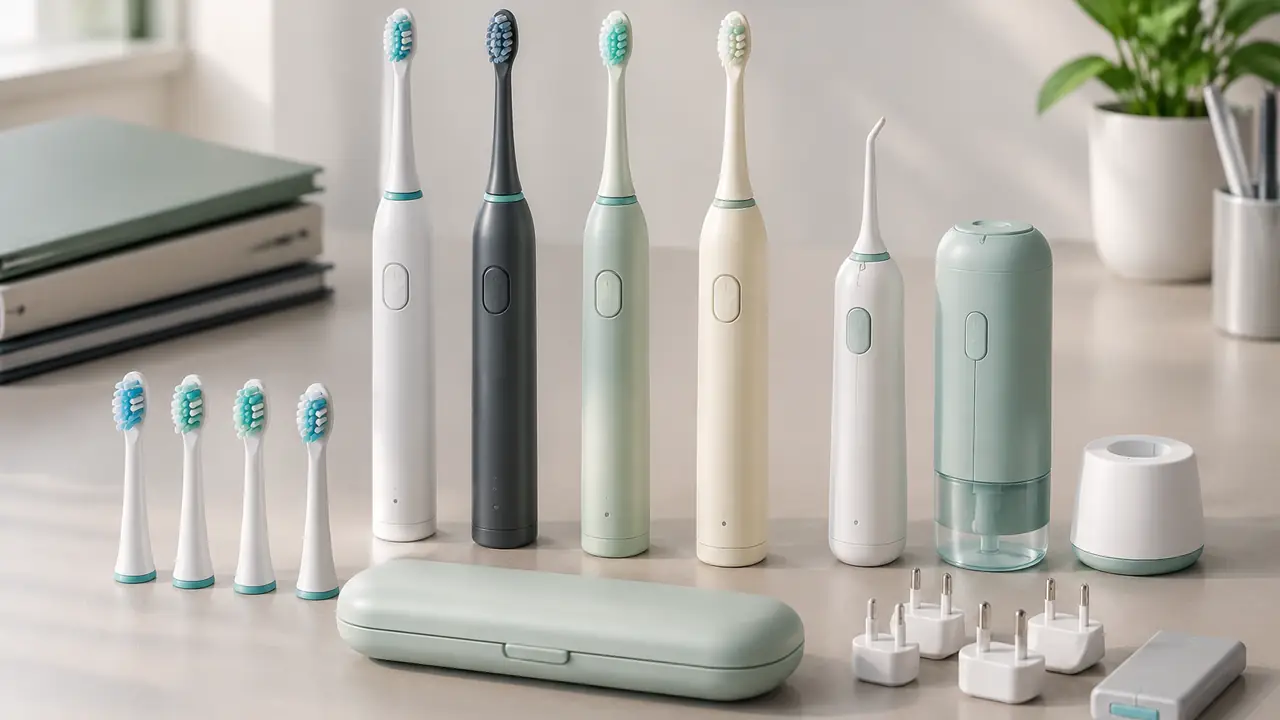
Part 2-52 addresses electric oral hygiene appliances rated up to 250 V - the category that holds sonic handles, rotary handles, U-shaped trays and the rechargeable electronics inside them. The standard's questions follow the product's real life in a bathroom: a device that is held in a wet hand, rinsed under a tap, set down on a wet basin edge and recharged on a counter. Construction and enclosure, insulation and creepage distances, the charging arrangement, resistance to moisture, stability and mechanical strength, and behaviour under abnormal conditions are the recurring themes, along with the marking and instructions that tell a user how the appliance may and may not be used.
Two practical notes sit alongside that scope. First, the standard is a safety document: it asks whether the appliance can be used without hazard, not whether it brushes well, so performance figures never appear in the file. Second, the appliance is evaluated as delivered - the seals, the charging path and the head joint are part of the safety case, which is why a changed shell or a new charging dock re-enters assessment rather than inheriting an old report. The desk treats any structural change to a model as a document question before it becomes a shipping question.
How the EN text feeds the CE file
For EU programs the European edition, EN 60335-2-52, is the harmonised route into CE marking. CE for an electric toothbrush is a self-declaration by the party placing the product on the market, but the declaration is only as good as the evidence behind it, and for this category the evidence is conventionally the test report on the EN safety text together with the EMC assessment - the appliance must neither suffer interference nor produce it. Reference timing across the desk's programs for a CE file with third-party reporting is about 2-4 weeks, confirmed in writing per program. The Declaration of Conformity, the test reports and the marking itself then travel together as one package: a CE mark on a box whose DoC names a different model is the kind of mismatch that stops customs clearance, and it is exactly what the desk's document checks exist to catch.
Buyers sometimes ask whether a CE-marked model can be sold in the United Kingdom on the same file. The marking story has its own post-Brexit layer - UKCA for the GB market - while the technical content beneath it remains the EN route. The desk treats the UK as the EU file plus a marking step, and confirms the current expectation in writing per program, because marking rules are exactly the kind of detail that shifts.
What evaluation looks at in practice
A buyer who has never sat through an appliance safety evaluation can picture it as a structured interrogation of the worst plausible day in the product's life. Samples arrive at the laboratory and are measured, opened, soaked, overheated, overloaded and run to failure on the standard's schedule: the enclosure is probed for access to live parts, insulation is stressed at elevated voltage, the charging circuit is examined under fault conditions, moisture tests reflect bathroom humidity and rinsing, and the appliance is run with blocked or stalled conditions to see how it fails. Marking and the manual are read as part of the safety case, because a warning the user never sees protects no one.
What surprises first-time importers is how much of the outcome is decided before the samples ship. A handle whose seals, creepage paths and charging design were drafted with the standard in mind passes cleanly; a handle modified after the fact collects non-conformities that cost weeks. This is why the desk encourages buyers to name the target markets at the brief stage - the quote form asks for them first - so the plant's engineers design against EN 60335-2-52 from the first drawing rather than retrofitting compliance onto a finished look.
What the standard does not cover
Part 2-52 is one layer of the file, and a complete program needs the others named alongside it. The lithium cell inside a rechargeable handle carries its own transport and safety papers - UN 38.3 and IEC 62133-2 - which the appliance report does not replace. A Bluetooth model adds a radio file: FCC Part 15 for the US, CE RED for the EU. Materials compliance runs on RoHS and REACH declarations, and North America runs its own appliance route entirely, UL 859, evaluated by UL or ETL rather than by the IEC text. None of these are optional extras where they apply; they are parallel files, each named by market, and the full set is mapped in the certifications checklist.
How the desk reads a 60335-2-52 report
| Buyer question | Where the answer lives | What the desk checks |
|---|---|---|
| Does this report cover our model? | Product description and photographs in the report | Compared against the current sample, including shell, dock and head |
| Is the right edition cited? | Standards list on the report face | Part 2-52 edition and the general part named together |
| Who holds the file? | Applicant and manufacturer fields | Name matches the plant that will ship the goods |
| Did everything pass? | Results and any appendices | Deviation notes read in full, not just the summary page |
| What is the rating basis? | Rated voltage and model variants | Covers the charging accessories quoted for the program |
The routine is deliberately mechanical, because compliance documents fail in boring ways: an old photograph, a retired cell, a report held by a trading company the plant no longer works with. Sonicelle holds no certificates; partner plant documents are verified per project, the agreed list is confirmed in writing before orders move, and the document discipline continues at testing and inspection on production batches. The regulatory context per market sits on the compliance and certifications page and in the long-form certifications guide, while reference program schedules live on MOQ and lead time. The North American counterpart to this note is UL 859 and ETL, and the waterproofing claims that sit next to the safety file are unpacked in IPX7 explained.