
What changes on a kids model
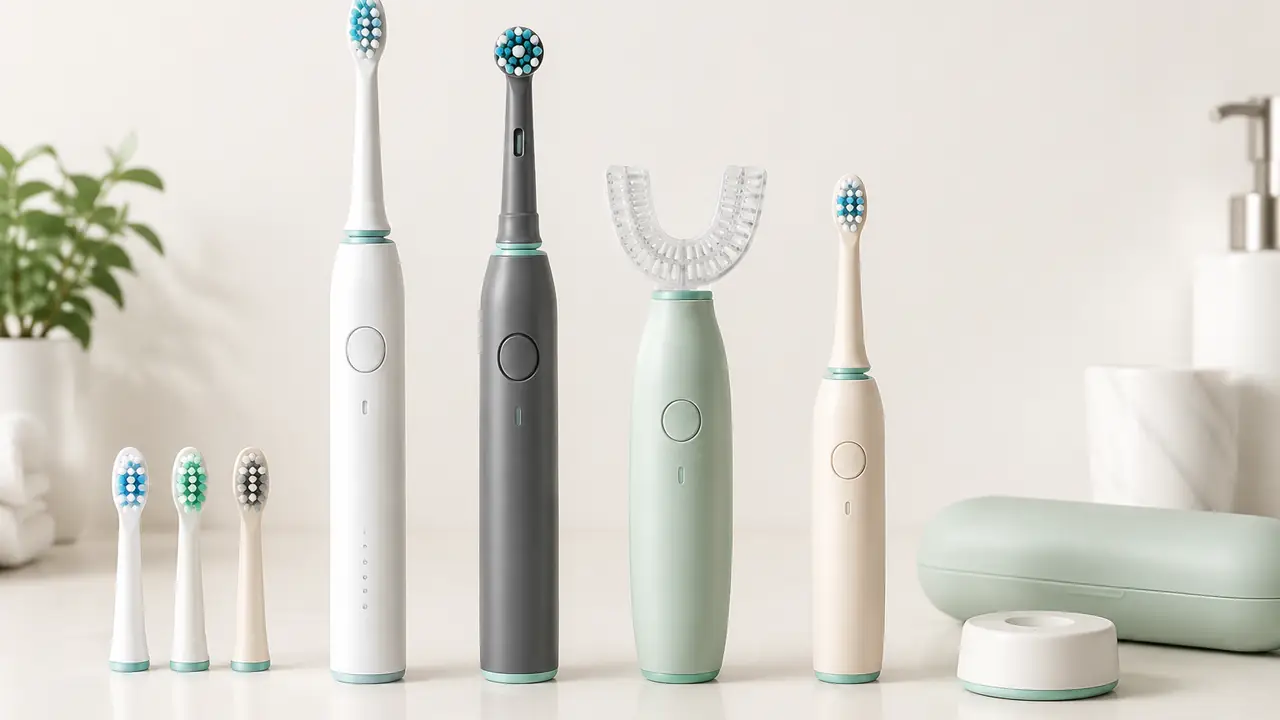
The kids format inherits its drive from the sonic family, then rescales everything the user touches. Heads run smaller with soft bristles; stroke counts sit in a lower band of 7,000-20,000 strokes per minute rather than the adult flagship range; firmware adds playful cues to the standard two-minute timer and thirty-second prompts; and the handle is trimmed for smaller hands and lower weight. The electronics underneath are familiar - the same sealed shells, the same board furniture - which is why plants quote kids models quickly. What is not familiar is the scrutiny: a children's product is judged on materials, construction and labeling before anyone discusses vibration figures, and that ordering should shape the whole program.
The commercial logic follows. Kids models are rarely a brand's flagship; they are the household's second and third handles, bought by the parent who already owns an adult model and wants the routine to survive contact with a six-year-old. Range design should assume that role: two or three age-banded SKUs with characters and colors doing the differentiation, not a deep ladder of technical variants.
The spec ranges a buyer can quote
| Parameter | Typical range across the category | Buyer note |
|---|---|---|
| Strokes | 7,000-20,000 strokes/min | Below adult bands by design; gentler feel |
| Brush head | Small head, soft bristles | Size bands follow age; tuft retention tested |
| Timer | 2-minute timer with playful 30-second prompts | Music, lights or pulses per model |
| Weight | Noticeably lighter than adult handles | Ask for the gram figure on the datasheet |
| Power | AAA cells or 3.7 V lithium, both common | Lithium adds UN 38.3 and IEC 62133-2 |
| Waterproofing | IPX7 | Category norm; kids drop brushes in water |
These are category reference ranges confirmed per model datasheet. The two figures buyers most often forget to ask for are weight and head size by age band - both cheap to state, both decisive for the parent holding the product, and both absent from many entry listings. The age-by-age note shows how the bands map to head sizes and power levels across a range.
Materials and construction before performance
On a children's product the materials file is the program. Plastics, paints and coatings should carry REACH documentation; any silicone component should state its grade and food-contact papers; and the mechanical test list reads like a parent's worry list made formal - drop tests, button-life cycling, brush head insertion and removal force, and tuft retention so bristles stay anchored. Sealing follows the IPX7 norm, and it earns its keep early because children leave handles in water. None of these items is unique to kids models; what changes is tolerance for shortcuts, because a bristle or a paint issue on a children's SKU is a recall-shaped event rather than a review-shaped one. The desk's quality control process treats the kids test plan as its own checklist, and the documents behind it are verified per project, not summarized.
Power: AAA or lithium
Both power families are in production and the choice is strategic. AAA-battery models avoid lithium paperwork entirely - no UN 38.3 transport tests, no IEC 62133-2, no battery marks on the carton - which simplifies marketplace listings and air freight, at the cost of the user buying cells forever. Lithium models at 3.7 V recharge and match the adult line's charging furniture, at the cost of the full battery document set and lithium shipping rules. For marketplace programs planning many small SKUs, AAA models carry less overhead per listing; for brand lines that want one charging ecosystem across the household, lithium wins. The battery toothbrush page covers the AAA format and the battery vs rechargeable note sets the trade-off out in full.
Certification route by market
The appliance route matches any electric toothbrush: IEC/EN 60335-2-52 with IEC 60335-1 for most export markets, CE marking on LVD, EMC and RoHS plus REACH, and UL 859 through UL or ETL for North America. A radio-carrying model - app pairing, music streaming - adds FCC Part 15 or CE RED, which is why many kids programs deliberately stay offline. In the United States the plant holds an FDA establishment registration, a facility matter that listings must never describe as product approval. Because this is a children's product, treat the certificate file as shelf-readiness: retailers ask for it earlier and inspect it harder than on adult SKUs. The certifications guide lists the matrix by market, and the desk verifies each document per project before a purchase order.
Age bands, characters and SKU structure
A workable retail range usually splits into two or three bands - a first-brush model for the youngest users, often closest to a U-shaped tray format, and one or two handle models for school-age children, with the toddler end served by the U-shaped toothbrush line. Character artwork moves units but arrives with a licensing question that must be settled before tooling: unlicensed likeness on a children's product is a takedown risk, not a saving. Where licensed artwork is not in budget, strong original graphics and colorways carry the format well, and the packaging program - window boxes that show the small head, age labels on the front - does more selling work than on adult SKUs. The structural comparison with adult builds is in kids vs adult design.
MOQ and what to ask a plant
Kids programs generally start around 1,000 pieces per model - the same band as U-shaped formats - because the child-scale head, graphics and packaging give the program tooling of its own even on a shared electronics platform. Samples follow the usual rhythm, 7-15 working days for catalog builds and 15-25 days for private-label, with mass production at roughly 30-45 days; all reference figures confirmed in writing per program through the desk, with the standing ranges on MOQ and lead time. The ask-list that keeps a kids program honest:
- The materials file first - REACH documents, silicone grade and food-contact papers where present, verified per project.
- The mechanical test report: drop, button life, head insertion force, tuft retention, IPX7 immersion.
- Head size and stroke band by age, and whether replacement heads for each size are in the platform's standing range.
- Power build and its consequences: AAA without lithium paperwork, or 3.7 V lithium with UN 38.3 and IEC 62133-2.
- Artwork ownership: who supplies the character graphics and on what license, settled before tooling.
One closing rule that binds harder here than anywhere else in the category: claims stay mechanical and sensory. A kids brush has soft bristles, a gentle mode and a two-minute timer with playful prompts - it helps remove surface stains and makes the routine easier to keep, and nothing in a listing should promise more than that.