
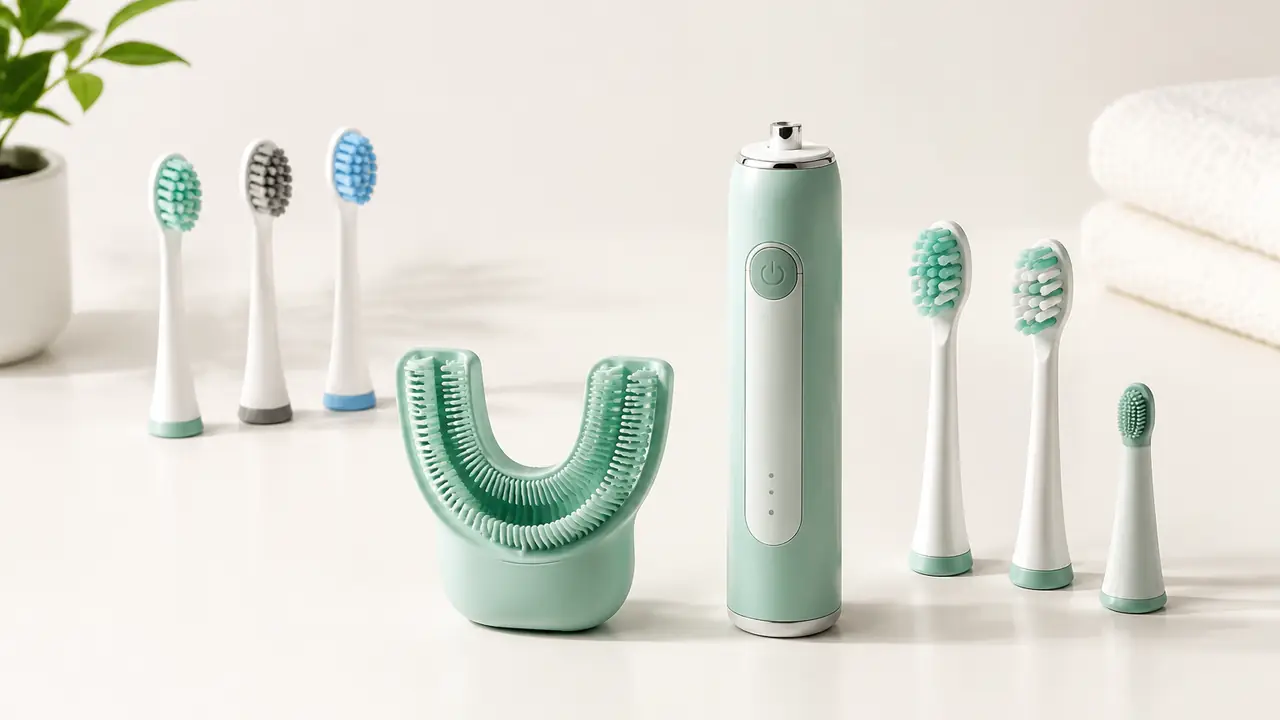
What a U-shaped toothbrush is
A U-shaped toothbrush replaces the small bristle head with a silicone tray shaped like a dental arch. The user bites into the tray, the motor vibrates the whole tray, and one short session covers the arch at once instead of sweeping tooth by tooth. Typical figures across the category: 8,000-20,000 vibrations per minute and an automatic timer of 45-60 seconds, after which the brush stops itself. Handles are compact, the tray is fixed or snaps onto the body, and the format is most common in kids ranges and orthodont-facing products. Concept background sits on the electric toothbrush overview.
It brushes differently - plan for that honestly
The honest note first: a U-shaped tray is a different tool, not a sonic brush with another head on it. The motion is vibration across a silicone tray in contact with the whole arch, so the feel, the brushing technique and the wear pattern differ from a bristle head that a user moves around the mouth. Test behaviour differs too, and the desk treats performance as a per-model question: vibration output, tray fit against the arch and silicone firmness are confirmed from each model own test report before any figure goes near a listing. Buyers comparing U-shaped handles against sonic ones should compare on format and fit, and read the format comparison before committing a range to either.
Silicone, sizes and age fit
The tray is the product. Food-grade silicone is specified per program with material declarations to back it up, and trays are molded per age profile: smaller arches and softer durometer for kids formats, fuller profiles for adult and orthodont versions. Because the tray has to match the arch it covers, a U-shaped range usually ships several tray sizes on one body rather than a single fit-all, and the head row of the nameplate card is where a buyer spends the most sampling time. Fit that misses by a size reads as does nothing to the user, whatever the motor does. Materials are covered in the silicone guide, age-based planning in the kids age guide, and the kids handle line itself on the kids electric toothbrush page.
Configurations plants quote most often
| Format | Tray | Typical users | Notes |
|---|---|---|---|
| Kids U-shaped | Small soft trays, softer durometer | Children ranges | Short timer, light body |
| Orthodont format | Tray profiled over brackets | Braces wearers | Wider tray, gentler modes |
| Adult compact | Full-size tray | Gift and novelty retail | Compact body, travel case |
Vibration bands, timers and tray profiles are confirmed per model datasheet; the table groups the formats plants quote most often, and the ranges above are category references.
Motor, timer and battery
Under the tray sits a vibration motor sized to the 8,000-20,000 per minute band, driven by a small board that carries one or two modes and the 45-60 second auto timer. Power is a 3.7 V lithium cell charged by USB or Type-C on most current models, which puts UN 38.3 transport tests and IEC 62133-2 on the document list. The appliance side certifies to IEC/EN 60335-2-52 with CE marking for Europe and UL 859 via UL or ETL for North America. Sealing follows the IPX7 practice used across handled oral appliances, confirmed per model rather than assumed from the category.
The orthodont channel
U-shaped trays appear often in orthodont-facing retail because the tray geometry sits over brackets and wires with no technique to learn - which is a format statement, not a health claim. Listings in this channel should stay descriptive about what the device is and how it feels, and leave treatment language out entirely; the desk reviews listing wording with the brand before photography is commissioned, because re-shooting a range after a compliance note is the expensive order. Deeper background is in the braces spec page and the orthodont market note.
Sourcing and inspection notes
MOQ for U-shaped models starts around 1,000 units per model as a reference range, confirmed in writing per program; private molds raise the figure and add tooling time. Inspection spends most of its time on the tray: silicone material declarations, durometer and flash, tray fit on the shaft, vibration output against the model report, auto-timer behaviour, IPX7 soak and drop checks. The plan is agreed before the first batch - see quality control and testing and inspection. Reference quantities and lead times are on the MOQ page, and a brief can go straight to the quote form.