
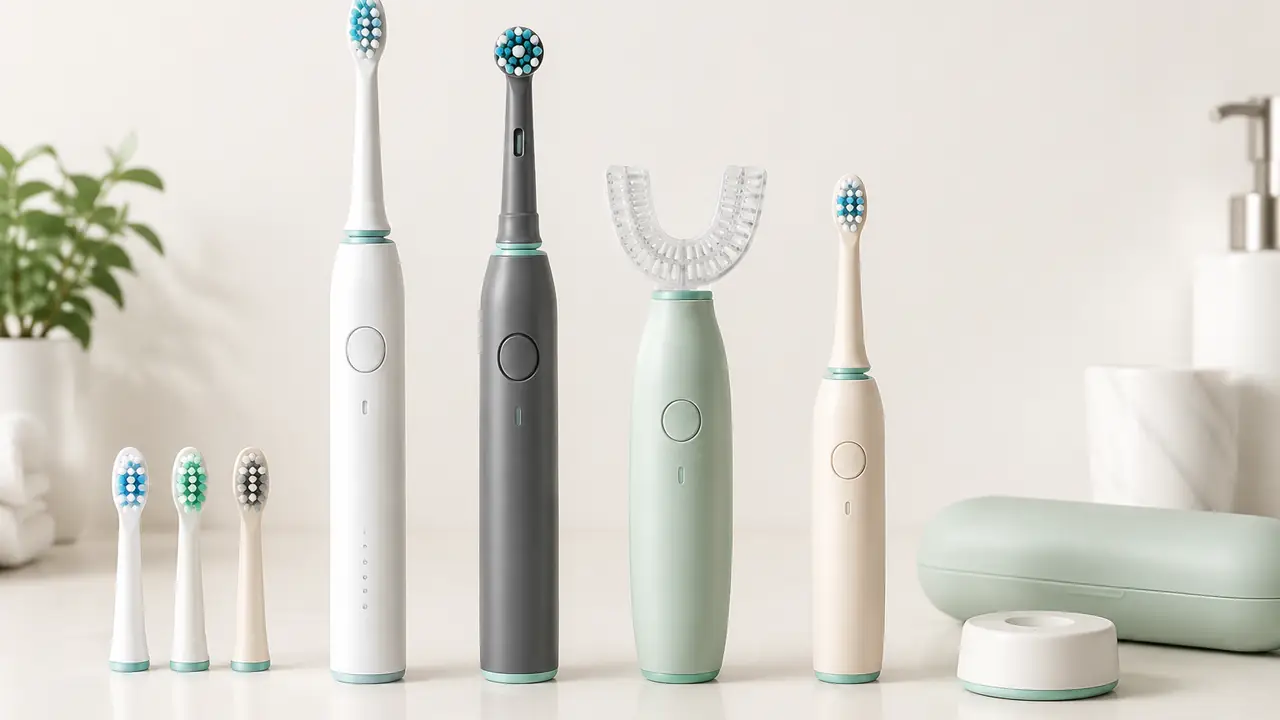
What the format is
Where a sonic or rotary brush moves a small head around the mouth, a U-shaped brush inverts the idea: the mouth settles around the tool. The working end is a horseshoe tray molded from soft silicone, grooved and finned on its inner faces so that, bitten into, it seats over the upper or lower arch. A motor in the handle vibrates the whole tray, an automatic timer closes the session, and the user swaps to the other arch. There is no steering and no two-minute routine in the usual sense - geometry does the positioning, vibration does the motion, and the whole exchange runs in well under a minute per arch.
The useful mental model for a buyer is head-first, not handle-first. On a sonic program the handle is the product and heads are its consumables; on a U-shaped program the tray is the product and the handle is its power source. Molds, materials, sizes and wear all concentrate in the tray. A sourcing conversation that starts from the electronics will skim past the parts that actually decide whether the SKU survives contact with a shelf.
The tray is the program: silicone decisions
Material questions dominate this format more than any other in the category. Platinum-cured silicone is the usual specification for mouth contact, chosen for low residual odor and stable feel across repeated washing; the plant should state the grade in writing and support it with food-contact test documents for the target market, verified per project rather than taken from a brochure. Durometer - the firmness - controls both comfort and how well the grooves hold their shape under bite; inner fin geometry decides how the tray meets the gumline; and the compound must tolerate repeated rinsing without clouding or tearing. None of this appears in a vibration number, which is exactly why sample trays should be bitten, washed and re-bitten before any decision.
| Item | Typical situation across the category | Why it matters |
|---|---|---|
| Vibration | 8,000-20,000 vibrations/min | Too low feels idle; too high wastes battery and comfort |
| Timer | 45-60 s automatic cycle per arch | The format's substitute for the 2-minute routine |
| Silicone grade | Platinum-cured, food-contact documented | Mouth contact - papers verified per project |
| Tray sizes | Child and adult sizes, usually two molds | Fit decides whether grooves seat on the arch |
| Battery | 3.7 V, 800-1,400 mAh with UN 38.3 and IEC 62133-2 | Standard lithium paperwork for shipping |
| Sealing | IPX7 | Tray holds paste and water against the neck in use |
The coupling between handle and tray is the detail that separates good units from mediocre ones. A tray that flexes loosely on the shaft loses vibration before it reaches the grooves; a tray molded too stiff transmits buzz into the jaw. Plants tune silicone durometer and snap-joint geometry together, and the result is felt, not read - one more reason the sample stage is the real evaluation for this format.
Electronics borrowed from the sonic platform
The handle side is familiar territory. Most U-shaped programs run the same 3.7 V lithium cells as rechargeable sonic handles, typically 800-1,400 mAh, with the corresponding UN 38.3 transport tests and IEC 62133-2 safety tests for the cell - paperwork that ships with the program and is verified per project. Charging follows the shared furniture of USB or wireless docks, and sealing meets the IPX7 norm that covers the category, which matters more than usual here because the tray holds paste and water against the handle neck during every session. The battery pack page covers the cell options, and plants that build sonic handles generally quote the format quickly because the electronics layer is shared; what they are really quoting is their tray mold.
Molds, sizes and MOQ
Tooling is where the format's economics differ from a catalog sonic. The tray mold is project-specific - geometry, groove pattern and durometer are all baked into steel - and most programs need two sizes to cover child and adult users. Minimums therefore generally start around 1,000 pieces per model rather than the 500-1,000 band of a catalog sonic handle, and samples run slower because the tray tooling is the project, not an accessory to it. A catalog-tray body with a buyer's colors and packaging is the fast route; a custom groove pattern or a new size is a tooling conversation with its own calendar. Reference quantities and schedules sit on MOQ and lead time, and the desk confirms both in writing for each program - the U-shaped numbers move more than most, because mold scope moves them.
Who the format serves
Two audiences carry the category, and honest positioning starts there. Young children are the core: a tray removes the coordination problem, the 45-60 second cycle fits a child's patience, and handle graphics do the persuading - which is why so many U-shaped programs sit beside the kids electric toothbrush line, and why the age-by-age structure in toothbrushes by kids' age is worth reading before fixing sizes. Orthodont wearers are the second group: a tray seats around brackets without the threading that interdental cleaning on fixed appliances demands, and the braces note covers the power and head choices in that market. Adults outside those two groups tend to return to a conventional handle once the novelty fades, so an adult U-shaped SKU should be planned as an accessory line, not a flagship. The direct comparison is in U-shaped vs sonic, and the structural differences between child and adult builds in kids vs adult design.
What to ask a plant
- Which tray molds exist today, in which sizes and durometers - because existing molds mean speed, and new geometry means tooling plus a slower calendar.
- The silicone specification in writing: grade, curing route, durometer, and the food-contact documents for the target market.
- Vibration and timer settings on the current board, and whether either is tunable per program.
- The cell specification with UN 38.3 and IEC 62133-2 reports, verified per project.
- How tray spares are supplied after the first order, at what minimum, for how long - the tray wears on its own slower cycle and the spares stream is part of the business case.
A brief built on those five lines quotes cleanly and compares cleanly across plants, which is the desk's job: shortlist the partners whose molds and silicone documentation actually match the program, then hold every agreed figure in writing before the purchase order. Start through the quote form.
Positioning and claims
The format sells on convenience and fit - a short cycle, a tray that seats itself, sizes that match an age group. Listings should stay exactly there: state the vibration range, the timer, the sizes and the sealing, and describe the brushing experience in sensory terms. Nothing about the format justifies therapeutic language - a U-shaped brush helps remove surface stains and makes a routine easier to complete, and wording that drifted toward treatment promises would put the whole SKU at risk in review. Buyers who position the tray as the easy-entry format for two specific audiences build a steady line; buyers who position it as a replacement for a conventional handle build a returns queue.