
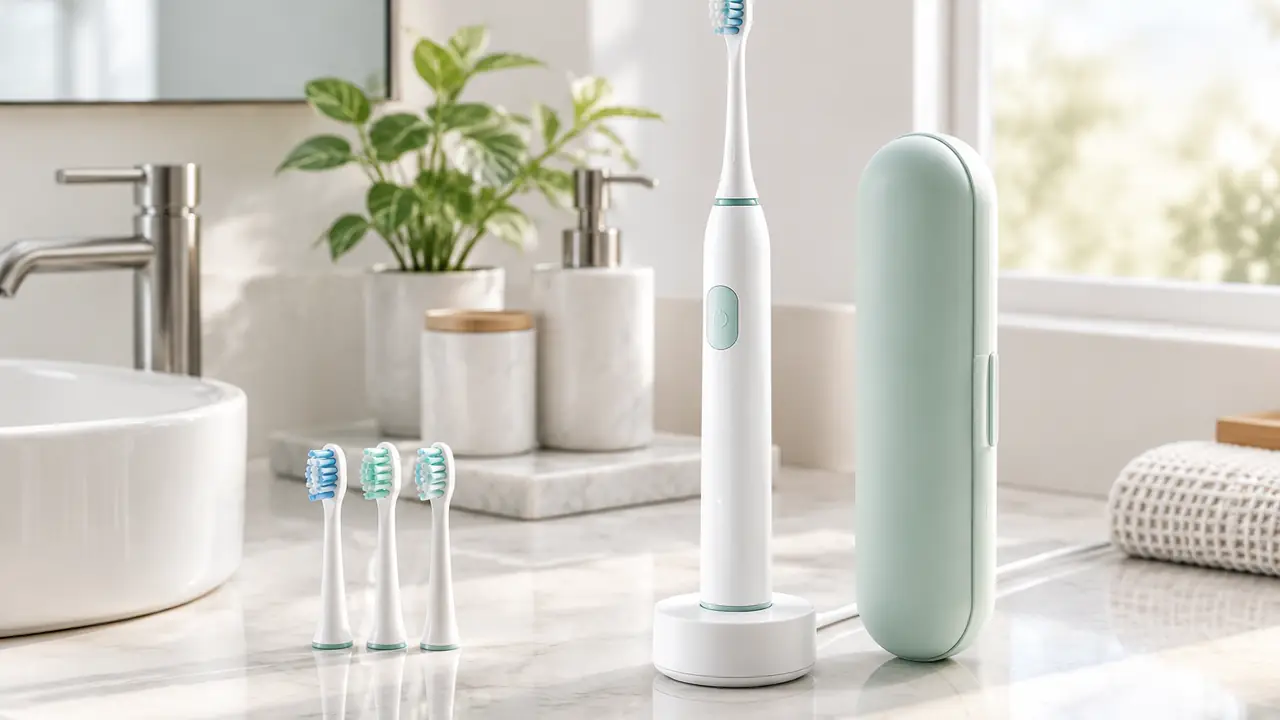
The brief behind the segment
Sensitive gums is not a clinical category on a spec sheet; it is a buying preference that shows up in retail data and in product reviews. A large share of first-time electric brush users find a full-power sweep too sharp, and many experienced users settle permanently on the softest mode their handle offers. For a brand or retailer, that preference converts into a concrete product brief: a handle whose floor setting is genuinely gentle, a head whose bristles make soft contact, and feedback that discourages heavy pressing. None of it requires new engineering. It requires selecting, from the standard option grids of the sonic platform, the combinations that sit at the gentle end - and holding the plant to them on the datasheet.
The sourcing question is therefore not whether plants can build a gentle brush; every competent plant in the category can. It is which combination of head, modes and sensing a plant will commit to in writing, and whether the sample units actually feel gentle in the mouth. This note walks the brief in that order: type first, then bristles, firmware, sensing, feel, and finally the paperwork and the wording, where this segment has harder limits than most. Reference quantities and schedules quoted below sit on the desk's MOQ and lead time page and are confirmed in writing for each program.
Which types fit the brief
Three of the product families on this site answer a sensitive-gums brief naturally, at three price points. The flagship route is a sonic handle with a soft head and a dedicated gentle mode. The value route is a lower-frequency entry sonic or a AAA-battery handle, whose lower mechanical energy makes it gentle by default. The niche route is the U-shaped silicone tray, whose contact softness comes from the material rather than the mode.
| Type | Why it suits the brief | Watch-outs |
|---|---|---|
| Sonic flagship | Elongated head, 2-5 modes with a gentle setting, amplitude about 1.5-3 mm | Feels gentle only with a soft head fitted - spec the pair together |
| Entry sonic or AAA battery | 20,000-31,000 strokes/min on entry sonic; 7,000-12,000 on battery handles | Check the mode list - some entry models run a single program |
| U-shaped tray | Silicone contact, 8,000-20,000 vibrations/min, 45-60 s cycles | Niche format; tray sizes and silicone grade dominate the conversation |
Most assortments build the sensitive tier inside the sonic family rather than as a separate platform, because the electronics are shared and the differentiation lives in the head and the mode firmware. That keeps tooling on catalog molds in most cases and lets the tier launch alongside the main line rather than after it.
Bristles: the first specification
The head decides how the brush feels long before any mode is selected, so the bristle call is the first one a buyer should lock. Soft nylon filaments with tapered tips are the standard answer: each filament thins toward a fine point, so the contact pressure per tip is lower than a flat-cut bristle of the same material. A higher tuft count spreads the load across more tips, and polished filament ends avoid the sharp edges that cut-trimming can leave. The replacement brush heads line lists the soft and tapered options plants keep on the shelf, and the materials behind them are compared in the bristle materials note.
Head size belongs in the same conversation. A compact head contacts fewer teeth per pass and is easier to position without scrubbing, which suits users who describe their gums as tender. Ask each plant which of its platform heads is the softest in the range, request the filament spec in writing, and have samples made with the shipping head attached - a gentle mode paired with a firm head fails the brief, and the mismatch is common enough that the desk checks for it on every sample.
Gentle modes: what the firmware changes
Across the category, handles carry 2-5 named modes, and a gentle or soft program is the most requested after clean. What the mode actually changes is worth pinning down, because two gentle modes from different plants are not the same thing. Typically the firmware lowers the stroke rate toward the bottom of the band - an entry sonic runs 20,000-31,000 strokes per minute against the 31,000-40,000 of flagships - or reduces amplitude within the 1.5-3 mm range, or both. The two-minute timer and thirty-second pacing prompts stay untouched, so the routine keeps its structure while the sensation drops. The brushing modes note explains how the common mode sets differ, and the desk asks every shortlisted plant for its firmware sheet so the mode list a buyer quotes on the box matches what the handle does.
A practical specification for the tier: clean, gentle, and one more program of the buyer's choosing, with the gentle mode as the default on power-up for this SKU where the platform allows it. Default-mode firmware is a small change with an outsized effect on how the product reads in hand, and it is negotiated far more easily before the purchase order than after.
Pressure sensing and the over-firm hand
The other half of the gentle-brush problem is not the tool but the hand on it: pressing harder is the most common habit a sensitive-gums user wants to break, and no bristle spec fixes it. Pressure sensing - an option on mid and premium sonic tiers - detects when force runs high and responds with a pulse or a light, which turns the correction into feedback the user notices in the moment. The mechanism is described in the pressure sensor note. For a tier aimed at this audience, the desk treats the sensor as close to standard: the component cost is modest, the feature anchors the marketing story mechanically rather than emotionally, and it is one of the few specifications that changes how the product is used, not just how it is described.
Feel: amplitude, buzz and noise
A gentle tier lives or dies on the handle's feel, and three qualities carry it. Amplitude is the first: within the category's 1.5-3 mm tip travel, the gentle end of the range reads as calm, and it is worth asking each plant where its gentle mode actually sits. Vibration transfer is the second: an overmoulded grip damps the buzz that makes a handle feel harsh, and grip comfort is judged with the shipping head fitted. Noise is the third: motor bays in this category are typically kept at or below 55-60 dB, and a quiet handle reads as gentle even before the mode is switched. Around the drive, the platform constants hold as usual - IPX7 sealing as the industry norm, a 3.7 V lithium cell of roughly 800-1,400 mAh giving 14-30 days of runtime at two two-minute sessions a day, and charging in 12-16 hours on a wireless dock or 4-6 hours by USB. All figures are typical across the category and confirmed against each model's datasheet.
Sourcing the tier and keeping the wording honest
Commercially, the tier follows the usual reference ranges: catalog-mold handles from 500-1,000 pieces per model, private-label programs from 1,000-3,000 pieces plus tooling, and replacement heads from 5,000-10,000 pieces. Public-mold samples usually take 7-15 working days. The appliance safety route runs under IEC/EN 60335-2-52 for most markets or UL 859 for North America, with UN 38.3 and IEC 62133-2 for the lithium cell; documents are verified per project rather than taken from a brochure, and every agreed figure is confirmed in writing before the order. A brief can be started through the quote form.
The wording limit matters more in this segment than anywhere else in the category. The product description should stay mechanical and sensory: soft bristles, gentle mode, pressure alert, quiet operation. It should not promise outcomes - no gum-health language, no treatment claims, nothing that reads as medical. Where a cleaning claim is needed at all, the ceiling is that mechanical brushing helps remove surface stains. Retailers in strict markets will strip anything stronger at the listing stage anyway, so writing the honest version at the artwork stage saves a revision cycle later, and the desk's packaging review checks artwork against that line before the box goes to print.