
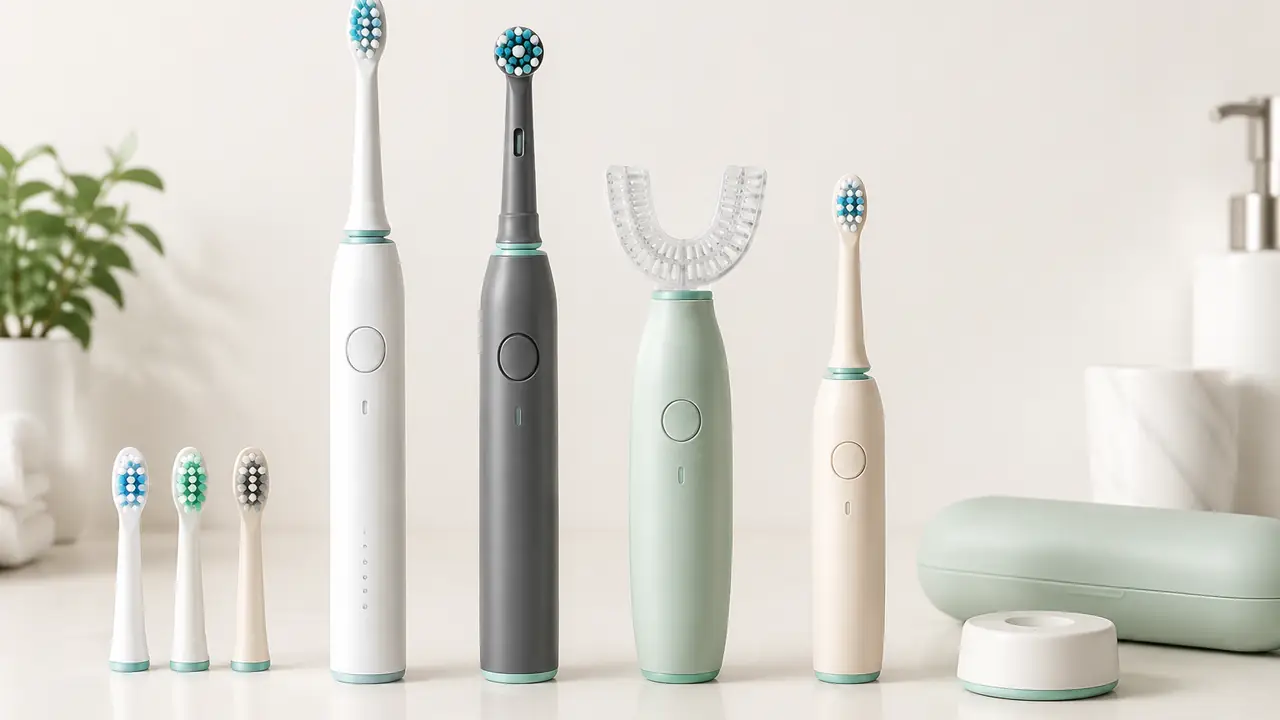
Two products, one shelf
Hotel dental amenities split into two businesses that happen to share a buyer. The first is disposable: individually sealed kits - brush, sometimes paste - stocked by the thousand, consumed per stay, judged on price per unit, sealing quality and presentation at the moment a guest opens the drawer. The second is keepable: a compact electric handle, usually a battery or travel format, presented as a branded courtesy or a retail item at the desk, judged on build, branding and whether the guest actually takes it home. Properties increasingly run both - disposables in the room, keepables at the front desk or in suites - and buyers who understand the two supply chains separately negotiate both better than buyers who treat amenities as one line item.
The disposable side and where it is made
Disposable amenity brushes are a volume business with a home address. Chinese media reports put Jiangsu's Hangji town in Yangzhou at roughly 7.5 billion brushes a year - on the order of 90 percent of China's toothbrush exports, shipped to more than 80 countries - a cluster built on manual brushes now extending into electric and sonic formats. The figures are attributed to media reports and used here as scale, not as a promise about any order, but the sourcing conclusion holds: the disposable amenity supply chain is the deepest and fastest-quoting in the category, with tooling and packaging as the real customization levers. What a hospitality buyer specifies: bristle softness, handle material and color, sealing method, paste inclusion and the kit's print quality - because at this price of entry, the wrapper is the brand. The cluster geography is set out on the industry clusters page.
Claims on disposables stay boring by design, which is correct. A sealed single-use brush is presented as sealed and single-use; the kit's contents are listed; and nothing in the wrapper promises outcomes, freshness science or anything a guest could misread. The wrapper's job is clarity and presentation, and the red lines that govern retail listings govern it identically.
The keepable side: battery and travel formats
The keepable electric amenity is a retail product wearing a hospitality uniform, and the natural bases are the battery toothbrush and travel electric toothbrush lines. The battery build - two AAA cells, single or dual mode, roughly 90 days per set at twice-daily use - suits properties that want a zero-charging courtesy handle a guest can use and keep, with no lithium documents and no dock in the kit. The travel build adds the case and the compact silhouette, reads as a gift, and suits resorts and extended-stay properties where the amenity doubles as merchandise. Branding runs from a debossed logo on the handle through co-branded sleeves to fully custom colorways, each step adding tooling and calendar. The desk's advice on placement is consistent: the keepable amenity works when it is presented as a gift or a purchase, and disappoints when it is stocked like a consumable, because its build cost lives several multiples above a disposable kit.
Programs, tenders and the math of a property
Hospitality volume behaves differently from retail volume, and the quote should be built on the property's arithmetic. A disposable program starts from occupied room-nights: kits per room per stay, par stock per floor, delivery cadence, and the replacement cycle for the drawer presentation itself. A keepable program starts from a different number - arrivals worth gifting, suites, loyalty tiers - and from the desk-side retail case if the property will sell the handle. Tenders add their own furniture: reference properties, artwork deadlines, delivery windows across properties, and packaging that survives centralized warehousing. The customization surface is wide - sealed kits, gift boxes, co-branded sleeves, fully custom handles - and the packaging program is where most of it lives, with the box constructions and print options set out for exactly this kind of multi-property work. The end-market view of guest-room programs is in guest-room toothbrush programs.
Compliance and materials
Both sides of the shelf carry documentation, in different weights. Disposable kits ride on material files - REACH documentation for plastics and packaging components, food-contact papers where paste is included - with sealing and labeling built to the destination market's packaging rules. Keepable electrics carry the appliance set: IEC/EN 60335-2-52 with IEC 60335-1 for most export markets, CE marking on LVD, EMC and RoHS, UL 859 through UL or ETL for North America, and - on lithium travel builds - UN 38.3 and IEC 62133-2 for the cell, which also shapes how spares and replacements ship to the property. US imports ride on the plant's FDA establishment registration, a facility matter and never a product approval. Every document is verified per project, and the certifications guide keeps the matrix by market. The export-packaging angle - carton spec, labeling, mixed-SKU loads for a property group - is covered in the export packaging note.
Disposable and keepable compared
| Dimension | Disposable kit | Keepable electric |
|---|---|---|
| Format | Sealed manual brush, optional paste | Battery or travel electric handle with case |
| Volume logic | Occupied room-nights, standing cadence | Arrivals worth gifting; desk retail |
| Supply base | Yangzhou cluster; deepest in category | Electric platforms; battery and travel lines |
| Branding surface | Wrapper, kit print, carton | Deboss, sleeve, colorway, gift box |
| Documents | Materials, REACH, packaging rules | Appliance route plus battery file if lithium |
| Failure mode | Weak seal, poor print at opening | Weak build; stocked like a consumable |
What to ask and how programs quote
Minimums differ by an order of magnitude across the two sides, which is why the desk quotes them separately: disposable kits move in large standing quantities set by the property's arithmetic, while keepable electrics follow the standard product bands - catalog builds from 500-1,000 pieces, private-label and custom colorways from 1,000-3,000 plus tooling, with samples at 7-15 working days for catalog formats. All reference ranges, confirmed in writing per program, with the standing tables on MOQ and lead time and the property brief started at the quote form. The ask-list for an amenity program:
- The property math in the buyer's own numbers: room-nights for disposables, gift or retail quantities for keepables, and the delivery cadence each implies.
- Kit specification: bristle softness, handle material, paste inclusion, sealing method and print quality, with samples of the sealed unit.
- Keepable format choice: AAA battery build with no charging furniture, or travel build with case - and the branding depth each supports.
- Packaging construction per property tier: drawer kits, gift boxes, desk-retail sleeves, and the artwork deadlines for each.
- Document set for the destination: materials files for kits, appliance and battery documents for electrics, verified per project.
One closing constant spans both products: amenities are the quietest claims environment in oral care and should stay that way. A sealed kit is sealed for single use; a keepable handle helps remove surface stains and travels well - and a program written inside those mechanics never has to defend its wrapper.