
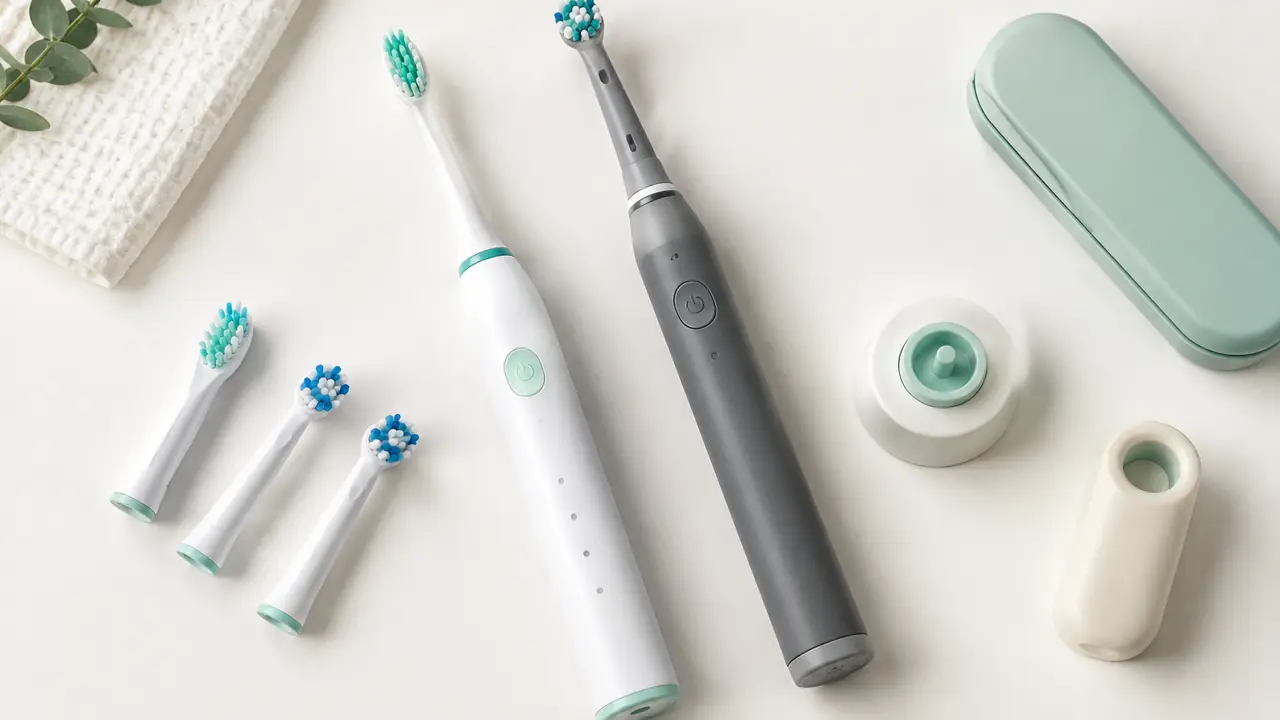
Two contact systems, not two grades
Nylon bristles and silicone fins answer different questions, so comparing them as better or worse misses the point. Nylon is the filament system: fine fibers, typically 5 to 8 mil in diameter with end-rounded tips, planted in tufts at controlled density so each tuft works as a small spring brush. Silicone is the molded system: soft fins formed into the tray itself, working as flexible paddles rather than filaments. The nylon head steers around the mouth and works point by point; the silicone tray wraps the arch and works by coverage. A buyer choosing between them is really choosing between the formats they belong to - bristle heads for sonic and rotary handles, silicone trays for U-shaped models - and the useful comparison is in how each material behaves on feel, wear, manufacturing and paperwork.
Side by side
| Dimension | Nylon bristles | Silicone fins |
|---|---|---|
| Form | Fine filaments tufted into a head at set density | Fins molded into the tray surface |
| Contact feel | Crisp, point-by-point scrub with visible lather | Soft, enveloping paddle feel over the arch |
| Formats | Sonic and rotary heads, all tiers | U-shaped trays, kids and orthodont models |
| Wear pattern | Tips fatigue on a visible cycle; head replaced regularly | Slower wear; tray replaced on a longer cycle |
| Manufacturing | Tufting and anchoring, density and trim height control | Molding, durometer and fin geometry control |
| Material story | Nylon grades incl. soft, spiral and charcoal-infused | Mouth-contact silicone, food-contact documented |
| Paperwork | Bristle spec and tuft-pull tests | Food-contact papers for the target market |
| MOQ reference | Heads from 5,000-10,000 pieces (inferred) | Trays ride the model minimum, about 1,000 pieces |
| Strongest fit | Everyday handle lines, subscription heads | Kids aisle, orthodont shelf, gentle-accessory lines |
The table rewards a second reading on the replacement row, because it is the one place the two materials meet the same business question. A head program lives or dies by the cadence of a small, visible consumable; a tray program lives on the model sale itself with a quieter parts story behind it. Neither is wrong - but a planner who expects tray revenue to behave like head revenue will misread the first year, and a planner who skips the head SKU entirely will strand every handle sold. Write both consumable plans into the program before the first order.
What each contact actually does
On a bristle head, the work is mechanical scrubbing at contact points: tuft tips cross the tooth surface thousands of times a minute as the handle sweeps or spins, paste carries the abrasive work, and the fast sweep of a sonic head pushes the paste-and-water mix between teeth and along the gumline beyond where the tips physically reach. On a tray, the work is coverage: the fins hold paste against broad surfaces while the whole tray vibrates at 8,000-20,000 vibrations per minute, and the 45-60 second automatic cycle paces the session. Both are honest mechanical descriptions of motion and contact. What neither description supports is a promise - surfaces stain removal wording stays as helps remove surface stains, and nothing in either material implies treatment. Buyers who keep listings inside those sentences can sell both formats in one market without wording risk.
Feel: what the user notices first
Nylon contact is crisp. A dense tuft field with end-rounded tips scrubs point by point, holds paste and whips it into visible lather, and communicates power - which is why flagship handles ride on fine, densely planted soft nylon. Trim profile tunes the feel further: taller, finer tips sweep along the gumline; shorter, firmer tufts polish flat surfaces; spiral and charcoal-infused filaments add texture and colour story. Silicone contact is enveloping. The fins flex over surfaces and around small teeth, and the sensation is pressure without scratch - the reason the material owns the children's tray category, where comfort at low power matters more than working lather. Neither feel is a claim: both are mechanical descriptions of contact, and listings should stay exactly there.
Wear: the replacement economics diverge
Nylon filaments fatigue visibly. Tips curl and lose their rounded profile on a cycle every user can see, which is the mechanical basis of the regular head replacement rhythm - and the recurring revenue every handle program is built on. Silicone wears more slowly; fins lose snap over months rather than weeks, and trays ride a longer replacement cycle with a quieter consumable story. For a line planner the consequence is straightforward: a nylon-head program needs a head SKU moving from month one, at reference minimums of 5,000-10,000 pieces, while a tray program replaces more slowly and earns less per user per year - one more reason trays position as accessory lines. The head platform question - which collars, which handles, which reorder cadence - is laid out in the brush head compatibility guide and the replacement heads note.
Manufacturing and paperwork
The two materials come off different floors. Nylon heads are tufted: filaments anchored into the head at controlled density, trimmed to height, tips rounded, then pull-tested so tufts do not shed in use - the no-shed process is a stated capability to verify, not assume. Silicone trays are molded: the grade and its curing route set feel and durability, durometer is specified in a band, and fin geometry is cut into the tool. Paperwork follows the contact: nylon heads carry a bristle specification and tuft-pull evidence; silicone trays, as mouth-contact articles, carry food-contact documentation for the target market, verified per project. Neither material's paperwork replaces the appliance file - IEC/EN 60335-2-52 or UL 859 for the host device - it rides beside it. The deeper material notes are in bristle materials and silicone in oral-care devices.
What to specify on each
On nylon heads, write the filament diameter, the grade by name, the tuft pattern and density, trim heights, tip rounding, and the pull-test evidence; pair it with the collar platform so heads and handles stay matched for the product's life. On silicone trays, write the grade and curing route, the durometer band, the fin profile and the food-contact papers by market. Both specifications belong in the first quotation, because bristle and tray choices move tooling, sample rounds and consumable economics more than any colour decision does. Reference minimums and schedules sit on MOQ and lead time, confirmed in writing per program, and a materials brief starts at the quote form.