
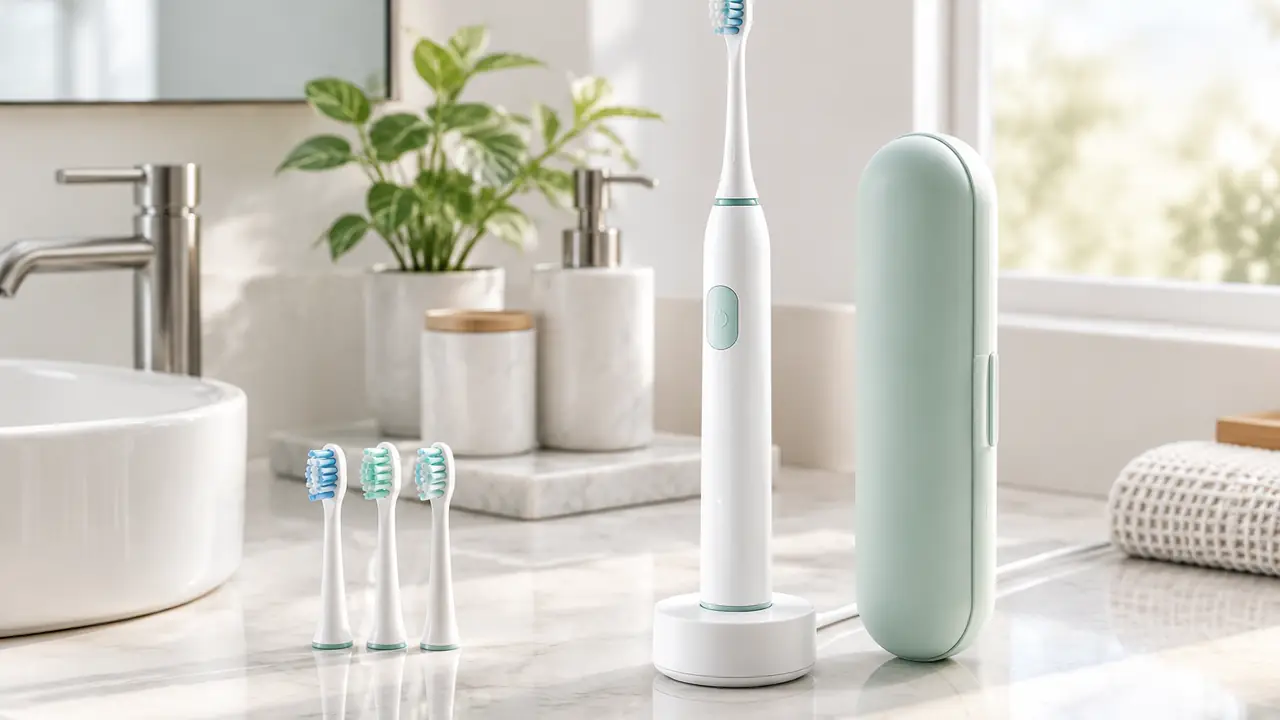
Why the shared bathroom is a set segment
The retail instinct is to sell one handle to one buyer, but the household reality is shared: two handles on one counter, one outlet, one cup, and a standing question about which head belongs to whom. Sets answer that reality as a product decision rather than an accident of two separate purchases, and they do it with components that already exist on every sonic platform - a second handle, a second head, dock and storage options, and a colour story that separates the users without a word. That is why sets keep appearing across the channel ladder: as gift products, as family packs, as the two-for positioning that anchors a seasonal promotion.
For a line planner the set is attractive for a quieter reason as well: it multiplies the refill. Two handles on one counter generate two head streams on one household budget, and the household that bought the set buys its heads together from then on. The set is therefore not just a gift SKU but a customer-acquisition structure, which is why the desk treats it as a deliberate line item in assortment planning rather than a bundling afterthought. The retail mechanics of sets and family packs are treated fully in the sets and family packs note.
The audience is broad, too. Couples are the name on the box, but the same structure serves parent-and-child households sharing an adult platform, roommates, and multi-generational homes - anywhere two handles meet one counter. The specification barely changes across those audiences: identity, charging and separation carry them all, which is why one well-specified set SKU can sit in a range for years and serve every one of them with nothing more than artwork refreshes.
The anatomy of a working set
| Component | What it does in the set | Specification to lock |
|---|---|---|
| Two matched handles | The pairing itself; identical spec, different identity | Same platform and firmware; two colorways or collar rings |
| Individual docks or charger | One outlet for the pair; the counter arrangement | Wireless dock per handle, or the platform's shared option |
| Distinct heads or collars | Head separation at a glance | Colour-coded collars from the head program |
| Storage | Keeps heads apart, upright and dry between sessions | Stand or vented case options from the case line |
| Set box | Sells the pairing at a glance | One tray, both handles visible, refill mention on pack |
Three of these rows decide whether the set lives or dies in daily use: identity, charging and head separation. The rest is presentation. None of the rows requires custom tooling on catalog platforms, which is what keeps set margins workable at gift-tier pricing.
Charging: the dock decision
Charging is where shared bathrooms succeed or clutter. Two cable-charged handles mean two cables and a negotiation; the wireless dock is the category's answer, standing the handles upright, charging through the base in the usual 12-16 hours, and occupying the footprint of a soap dispenser rather than a charging station. Most platforms ship one dock per handle, which doubles the counter presence; some offer shared or multi-position bases, and whether a plant's platform carries one is a straight catalog question the desk asks during shortlisting - it is a real option on some platforms and absent on others, so it belongs in the brief rather than the assumption. For guests' bathrooms and travel halves of a couple's life, the vented travel case doubles as storage; its hygiene mechanics are covered in the travel cases note. The full dock and case menu sits on the charging dock and case line.
Storage and head separation
Between sessions, heads need to dry upright and apart - shared cups are where brushes touch, and touching brushes are the household's first hygiene complaint. The stand or case options solve it mechanically, and the set specification should include one, because a set without storage arrangement loses its tidy promise within a week of the counter. Separation is the second half: colour-coded collars from the replacement heads program let each user pick a colour at purchase and buy the same colour forever, which quietly turns refill purchasing into a habit rather than a decision. Plants carry collar colouring as a standard option; the desk ties the two refill colours to the same head platform so the household's reorder is a single SKU choice per user, confirmed in the set's insert card so the habit survives past the first head change.
Gifting and the seasonal calendar
The set's demand curve follows the gift calendar rather than the oral-care one, and planners should stock to it. Peaks arrive with the year-end holidays and the wedding-and-housewarming seasons, when paired sets read as complete gifts; the rest of the year the set sells as a household upgrade or a move-in purchase. That curve shapes the program: packaging quantities front-load before the peaks, gift-edition colourways lean neutral rather than loud, and the insert card does double duty as a gift card. Plants hold gift-box formats across the standard structures, so a gift edition is a packaging decision rather than a product one - the handles, docks and heads stay identical, and the box carries the season. Retail buyers typically book gift editions as one seasonal buy plus one base-stock buy, and the desk schedules both against the same written commitments as any other program.
Set structure and program notes
Retail-wise the set is a gift-tier SKU: it needs a box that shows both handles at once, a plain statement of what is inside, and a refill mention on the pack, because the set buyer is also the household's future head buyer. Retail chains use exactly this structure for seasonal gifting under private label, and DTC brands use it as the household launch offer. Program mechanics follow the standard references: catalog-mold handles from 500-1,000 pieces per model, private-label decoration and set packaging typically from 1,000-3,000 pieces plus tooling, heads from 5,000-10,000 pieces per style, samples in 7-15 working days. Documents follow the platform - IEC/EN 60335-2-52 or UL 859, with UN 38.3 and IEC 62133-2 where lithium cells are fitted - verified per project, and every figure confirmed in writing. A set brief goes through the quote form naming both colorways, the dock option and the head colours, and reference schedules sit on the desk's MOQ and lead time page.