
Ranges, not single SKUs
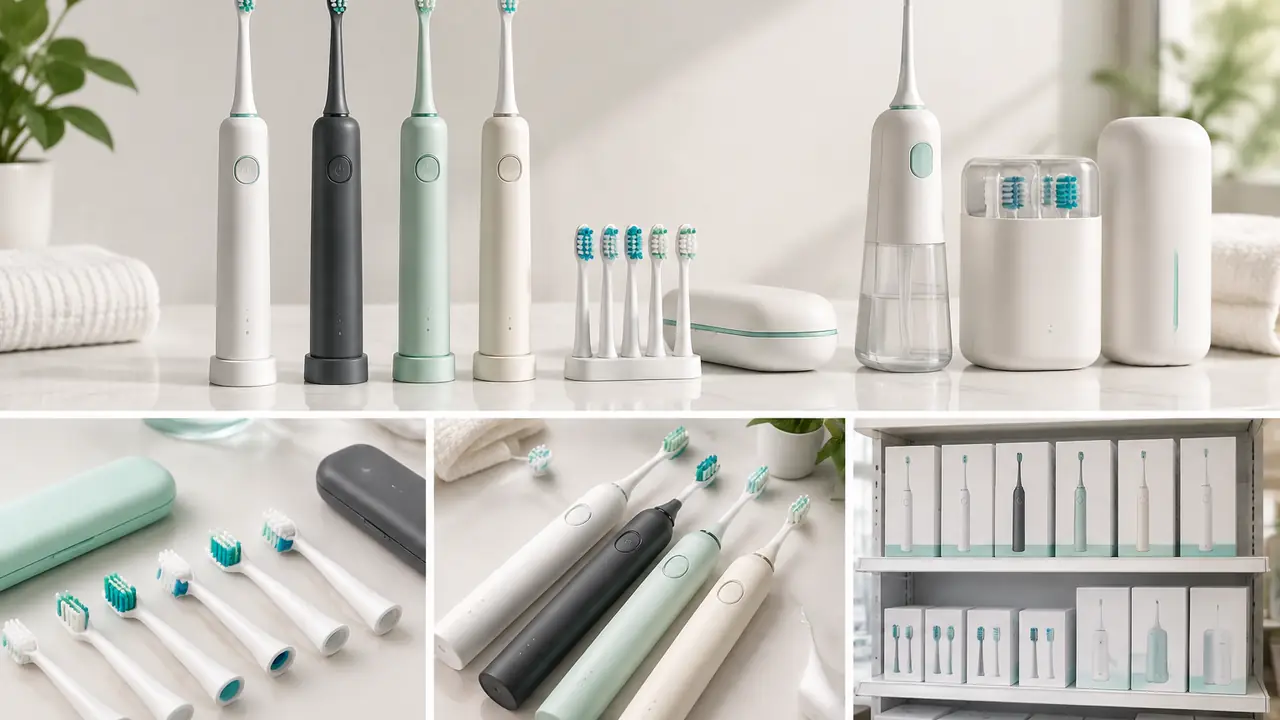
A chain buyer reviews a category, not a product: an entry tier for the price-sensitive shop, a mid tier that carries margin, a kids model beside the adult one, and a refill peg that keeps customers returning between handle purchases. The desk assembles that range from catalog bodies on one shaft platform wherever possible, so a single head profile family serves every handle on the shelf and the refill business compounds instead of fragmenting. Private label quantities start around 1,000-3,000 units per model with the store brand on the carton, the insert and the manual; head packs run 5,000-10,000 units. Seasonal resets are planned against the store calendar, so the range lands with the planogram rather than after it, and re-orders for the refill peg are booked on the same schedule as the handles they belong to. Where the chain wants an exclusive appearance rather than a branded catalog body, the private mold route from the brand-owner program applies, and the head platform is decided first so refills stay chain-exclusive too.
Shelf-ready packaging
Retail packaging is engineering under the artwork. The colour box must survive the pallet and the peg, show the product through a window, carry the barcode, the multilingual panel and the regulatory marks, and open without a knife in the aisle. The desk coordinates the packaging plant with the handle plant, approves dielines and physical mock-ups against the store specification, and plans the master carton as the store receives it - some chains shelve straight from an open carton, which makes the master box a display and changes the print plan. Insert materials, try-me openings and hang tabs are specified per tier, and the kids tier adds its own constraints on small parts and warnings wording. All of it is confirmed at mock-up stage, because a packaging change after mass production costs weeks and can miss the reset date entirely. The packaging and retail boxes page carries the full workflow.
After-sales spares behind the shelf
A chain takes returns at the service desk, so the program plans for that counter. Heads are stocked on the refill peg and re-ordered on the handle cadence. Docks, cases and cables are stocked in smaller depth so a warranty swap does not mean replacing the whole handle. Where the chain policy requires it, a small stock of warranty handles is held per season, sized from the inspection record and the return history rather than guessed. The after-sales planning note sets out the method. The parts list stays tied to each appearance, so a replacement dock ordered in year three fits the handle sold in year one, which is what keeps the warranty line cheap for the chain and calm for the customer.
Inspection and store audits
Chain buyers audit twice: the goods and the source. For the goods, an AQL inspection plan is written before production - charging, modes and timer, runtime from a full charge, the IPX7 soak on sampled units, head retention, carton drop - and one record per lot ships with the goods, so a store claim can be traced to a batch rather than argued about. For the source, partner plants carry ISO 9001 systems and BSCI or SMETA social audits where the chain requires them; documents are verified per project, and fresh on-site audits can be arranged when a buyer pack demands a current date. Sonicelle holds no certificates itself; the desk supplies the plant documents in one pack, named and dated, so the buyer file needs no reassembly at each reset. The testing and inspection page describes how a lot is checked and what the record contains.
A three-tier range on one platform
An illustrative, anonymized range for a national chain. Quantities follow the private label bands, confirmed in writing per program.
| Tier | Line | Packaging | Spares plan |
|---|---|---|---|
| Core | Kids electric, soft head, 7,000-20,000 strokes/min | Colour box with try-me window | Head refills on the same peg |
| Mid | Sonic handle, 2-3 modes, 20,000-31,000 strokes/min | Sleeve with pulp insert, hang tab | Docks and cases at the desk |
| Premium | Sonic flagship, 4-5 modes, 31,000-40,000 strokes/min | Gift-ready box, window display | Warranty handle stock per season |
| Refill | Replacement heads, 2-4 profiles | Blister card, peg-ready | Re-ordered on the handle cadence |
What the buyer pack contains
The pack a chain buyer receives is standardized: spec sheets per model from the datasheets, the test report list with report dates, carton dielines and mock-up photos, the inspection plan and the latest lot record, the spares plan with quantities, and a timeline showing sample, batch and re-order windows against the store reset calendar. Nothing in it is written for the first time at the end; every sheet is produced in the normal run of the program and collected as it happens, which is why the pack exists before the buyer asks for it. Programs start through the quote form with the ranges on the MOQ and lead time page as the baseline, and the private label workflow is described in full on the OEM and private label page.