
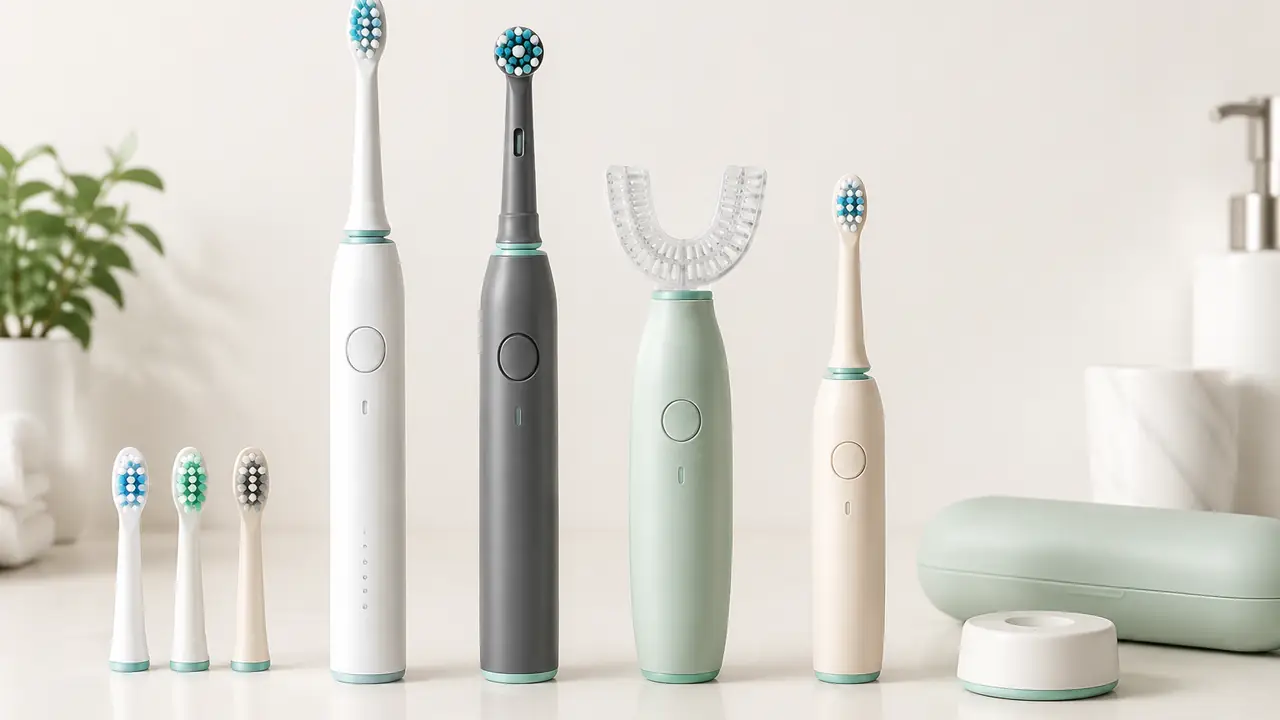
What makes a handle smart
The smart format starts from a proven base: a sonic drive in the flagship band, 31,000-40,000 strokes per minute on typical builds, sealed to IPX7, running the standard two-minute timer and thirty-second prompts. Three additions make it smart. A pressure sensor detects when the user bears down and responds with a pulse or light. A Bluetooth radio pairs the handle to a mobile app that tracks coverage by zone and files a session report. And the firmware carries more modes than an entry board - typically part of the 2-5 mode span across the category - because the sensing layer gives the modes something to act on. Underneath, the architecture is the plant's existing sonic platform, which is why the format quotes quickly: what is really being evaluated is the sensing-and-software layer on top.
The sensor layer: what it does and what to verify
The pressure sensor is the feature most worth its cost. It closes the gap between what a user feels and what is actually happening at the bristle line - the classic habit is pressing harder to brush harder, and a handle that pulses back breaks the habit without a word of instruction. Verification is practical: sample units should show the sensor triggering at consistent force across several heads, the alert surviving a firmware mode switch, and the behavior documented on the datasheet rather than described in sales copy. App-side sensing is a different animal: zone tracking infers coverage from motion, and its quality varies more between plants than any hardware figure. The desk's standing advice is to have real users run the app for a week on sample handles before committing - coverage maps that look tidy in a plant video often fall apart in a bathroom with one hand and a mirror. The sensor's end-market logic is covered in pressure sensors in toothbrushes.
The radio changes the paperwork
A Bluetooth handle is a radio product, and the document set grows accordingly. The appliance route still applies in full - IEC/EN 60335-2-52 with IEC 60335-1 for most export markets, CE marking on LVD, EMC and RoHS plus REACH, UL 859 through UL or ETL for North America, and the lithium cell's UN 38.3 transport tests and IEC 62133-2 safety tests. On top sit the radio approvals: FCC Part 15 in the United States and CE RED in Europe, each with its own test lab time and its own failure modes around antenna placement in a sealed, wet, hand-held product. Plan the schedule with the radio inside it rather than appended - a smart program that treats approvals as an afterthought discovers them at the packing stage. The FCC and CE RED note walks the radio route in detail, and the certifications guide keeps the full matrix by market. As always, documents are verified per project; the desk holds no certificates of its own.
Data privacy is a sourcing question
An app that tracks daily habits and pairs them to an account is a data product wearing a toothbrush's clothes, and the buyer shares its exposure. The questions belong in the sourcing conversation, not the legal review after launch: what data the app collects and where it is stored; whether the product works without an account or degrades to a bare handle; what the privacy policy says and who wrote it; and how the market's data protection rules for the launch territory are met. Buyers launching in markets with strict data regimes should expect the app - not the handle - to be the compliance bottleneck, and should ask for the policy and the data-flow description in writing alongside the radio test reports. The desk treats the privacy file as part of the program document set, verified per project like everything else, and flags any plant that cannot produce one.
Firmware, updates and after-sales
Smart hardware ships with a software promise attached, and the promise has an owner. Who maintains the app two years after launch; on which phones and OS versions it must keep running; whether firmware updates reach shipped handles or only new production; who owns the code if the relationship ends - these are contract items, and the plants that build smart handles seriously answer them without flinching. The failure pattern in the category is well known: a handle outliving its app, leaving a branded product with dead features on the box. Brand owners building a flagship on the smart format should weigh that lifespan honestly - the brand owner program covers the OEM side of software ownership - and compare the smart SKU against its simpler sibling in smart vs standard before committing the flagship slot.
Spec summary and what to ask
| Layer | Typical setup across the category | Confirmed by |
|---|---|---|
| Drive | Sonic platform, 31,000-40,000 strokes/min band | Model datasheet |
| Sensing | Pressure sensor; motion-based zone tracking in app | Sample testing plus a week of real use |
| Firmware | Part of the 2-5 mode span; timer and prompts standard | Firmware sheet |
| Radio | Bluetooth to mobile app; session reports | FCC Part 15 / CE RED reports |
| Power | 3.7 V, 800-1,400 mAh; 14-30 days runtime | UN 38.3 / IEC 62133-2, runtime report |
| App | Zone coverage, brushing reports, account model | Privacy policy and data-flow note in writing |
Minimums follow the private-mold band more often than the catalog one - 1,000-3,000 pieces plus tooling is the common shape of a smart program, because the sensing layer and app integration assume a body the brand will keep - with samples at 15-25 days for private-label builds and production at 35-50 days after approval. Reference figures only; confirmed in writing per program, with the standing ranges on MOQ and lead time. The ask-list for a smart brief:
- The sensing layer in writing: pressure trigger behavior, zone tracking method, and what the app records session by session.
- The radio file: FCC Part 15 or CE RED reports for the exact antenna build, verified per project.
- The privacy package: data collected, storage location, account model, and the policy text for the launch market.
- The software lifetime: who maintains the app, update commitments, and code ownership if the program changes hands.
- Power and runtime evidence behind the 14-30 day figure at two 2-minute sessions a day.
A brief that carries those five lines compares cleanly across plants, which is the desk's job - shortlist, sample, verify, and hold every agreed figure in writing before the purchase order. Start at the quote form, and keep the claims where the format lives: a smart brush paces a routine, senses pressure and reports coverage - it helps remove surface stains, and the app is a mirror, not a medical opinion.