
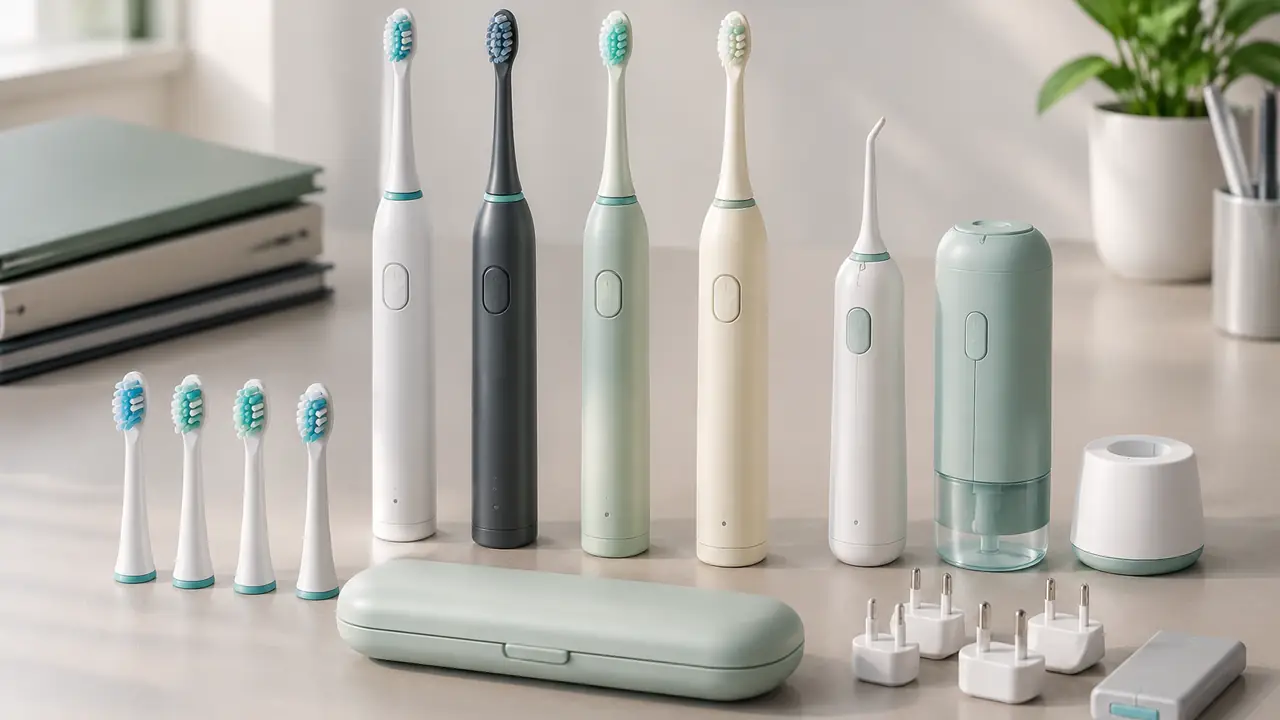
A radio inside an appliance
A smart toothbrush is two regulated products in one shell. Underneath, it is an oral hygiene appliance judged on safety in a wet bathroom - the IEC 60335-2-52 or UL 859 layer that every handle carries. On top, it is a radio transmitter: a small Bluetooth system broadcasting to a phone app, session data and mode settings crossing the air a few times a day. Radio transmitters are regulated in their own right wherever they are sold, because the radio spectrum is a shared resource, and the two identities bring two separate files that do not substitute for each other.
For buyers this is the single biggest difference between quoting a standard handle and quoting a smart one. The radio adds a component with its own approval lineage, a firmware dimension to freeze before testing, and a layer of documentation that retailers in both regions ask about by name. It also adds discipline: a smart model whose radio hardware or firmware changes mid-program re-enters assessment, so the smart specification should be frozen earlier and held firmer than a standard one. The product context is on the smart toothbrush line page and in the smart toothbrush buyer guide.
FCC Part 15 for the United States
In the United States, radio devices are governed by the FCC's rules, and Part 15 is the section a Bluetooth toothbrush meets. In general terms, the process puts the finished radio product through evaluation at an accredited laboratory: the transmitter is checked to operate within its assigned parameters - frequency, power and bandwidth appropriate to Bluetooth - and the whole device is checked for unintentional emissions, because a toothbrush is also a small digital appliance whose motor and switching electronics must not radiate beyond permitted limits. The evidence ends in the documentation and identification that the US market expects a radio product to carry, and listings for the US should describe the radio function accurately rather than borrowing language from other product types.
Two practical notes for program planning. First, the evaluation treats the product as built: antenna placement, shell materials and board layout are part of what is tested, which is why cosmetic changes after approval are checked rather than assumed harmless. Second, many toothbrush designs start from a radio module that already carries its own approval lineage, but the finished model is still assessed as a whole - module paperwork supports the file, it does not replace it. Both notes point to the same habit: freeze the radio design early, and treat any later change as a document question first.
CE RED for the European Union
In the European Union the corresponding layer is CE RED - the Radio Equipment Directive - which radio products meet as part of CE marking. In general terms, RED asks three families of questions of a Bluetooth toothbrush: that the radio uses spectrum efficiently and does not interfere with other users of it; that the equipment remains safe, connecting back to the safety expectations a buyer already knows from the appliance layer; and that it meets electromagnetic compatibility requirements both as an emitter and as a receiver. The outcome joins the CE technical file alongside the EN 60335-2-52 safety reports, the EMC work and the RoHS and REACH materials papers, with the Declaration of Conformity naming the directives the model meets.
The desk's planning note mirrors the American side: the RED file is built on the finished radio design, so firmware and hardware freeze points matter as much here, and a model sold into both regions is scheduled so the radio work serves both files without duplication where the rules allow. What the desk does not do is assume equivalence between the regimes - they ask related questions in different paperwork, and each file is verified for its own market. The whole map of layers by market is in the certifications checklist and the long-form certifications guide.
How the radio changes the product build
Quoting a smart model touches the bill of materials in ways a buyer should see coming. The PCB carries the radio and its antenna, and antenna placement competes with the seals, the motor bay and the charging coil for the same centimetres of handle - a layout conversation, not a parts swap. The firmware becomes a deliverable: mode logic, pairing behaviour and data handling are versioned, and the version that goes to the laboratory for approval should be the version that ships. And the app itself, while not part of the radio approval, is part of the product's compliance story in the broader sense - privacy wording, data handling and update behaviour are questions retail reviewers ask alongside the radio file.
| Layer | US file | EU file | Notes for the program |
|---|---|---|---|
| Radio function | FCC Part 15 evaluation | CE RED assessment | Built on the frozen radio design and firmware |
| Appliance safety | UL 859 via UL or ETL | EN 60335-2-52 under CE | Separate files; scheduled in parallel |
| Battery papers | UN 38.3 and IEC 62133-2 | UN 38.3 and IEC 62133-2 | Attach to the cell model |
| Materials | Declarations as evidence | RoHS and REACH | BOM-level; rechecked on changes |
Sequencing the radio work in a program
In the desk's smart programs the radio file is scheduled with the appliance file rather than after it: the radio design and firmware are frozen at the same milestone as the shell and dock, engineering samples go to the laboratories together, and the results arrive in time to gate batch production. The failure pattern the desk designs against is familiar - a marketing change requested after approval, a new app feature that touches firmware, a cell swap that quietly alters the board - each small enough to feel harmless and each one reopening a file. The routine that prevents it is contractual rather than technical: changes are proposed in writing, checked against the approved documents, and either deferred or re-verified before production continues, with checks continuing through testing and inspection on every batch.
Reference timing for the surrounding steps - samples, batch production, certification windows for the appliance and battery layers - lives on MOQ and lead time, and the radio-specific expectations are confirmed in writing per program, because laboratory schedules and regional rules shift. A smart-model brief that names its markets, its app behaviour and its radio intentions at the start moves fastest, and it begins at the quote form.
Wording and data notes for smart models
Smart models invite listing language that standard handles never tempt, and the same red lines apply. The brush helps remove surface stains, paces sessions and reports what happened; it does not treat anything, and app charts do not turn a mechanical description into a health claim. Data wording matters too: if the app records sessions, the listing should say plainly what is recorded and give the app's own privacy documentation a link, because marketplace and retail reviewers increasingly read that sentence before they read the strokes-per-minute figure. The electronics behind all of it - boards, sensors, firmware versions - are covered for the technically minded in the PCB and firmware note, and the regulatory context for every layer sits on the compliance and certifications page. Sonicelle holds no certificates; partner plant documents, including the radio files, are verified per project before any listing goes live.