
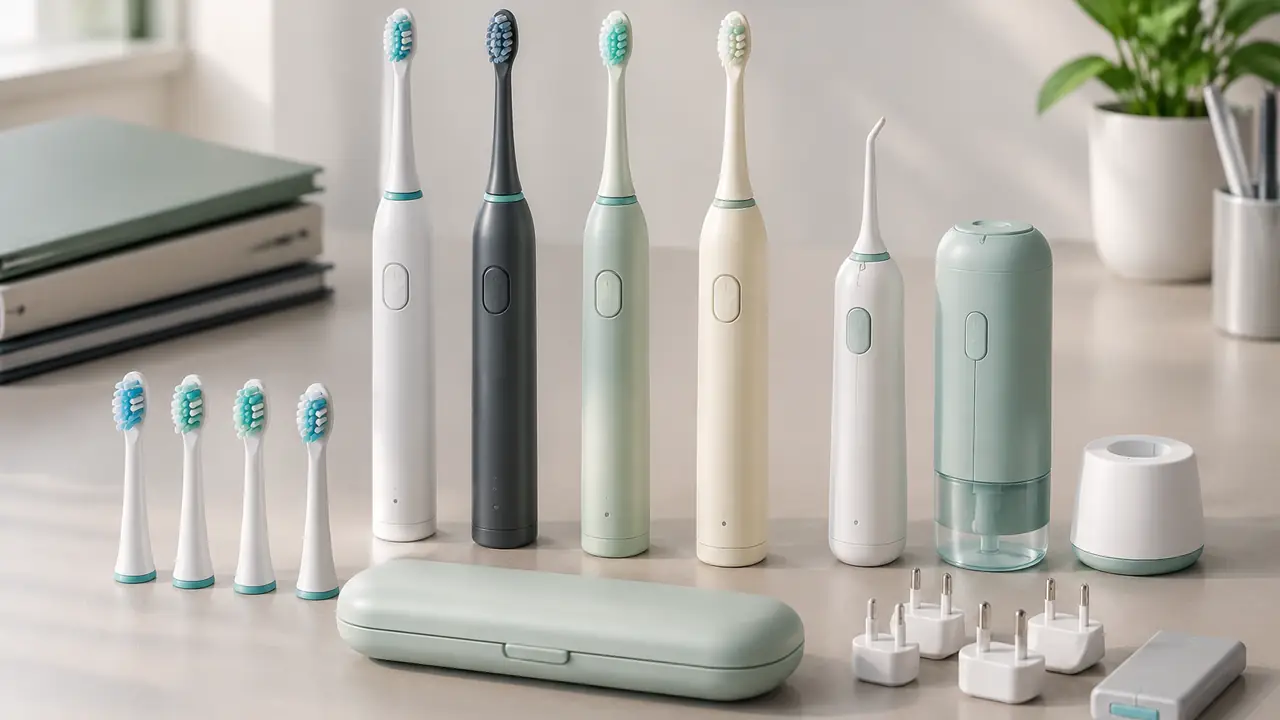
The route in one view
An electric toothbrush entering the European Union carries four layers of paperwork, and the order of assembly matters less than the completeness. The appliance layer is the CE marking file, built on the European safety text for oral hygiene appliances and the EMC assessment. The materials layer is RoHS and REACH, answered with declarations mapped to the bill of materials. The battery layer is the lithium cell's transport and safety papers, UN 38.3 and IEC 62133-2, attached to the cell model. The radio layer, on Bluetooth models, is CE RED. Around those four sit the trade mechanics - a customs broker confirming codes, freight booked with the transport rules in mind, and the buyer acting as the responsible importer. None of the layers is difficult alone; the programs that stumble are the ones that discover a missing layer at the port.
The desk's planning habit for EU programs is to fix the market list first, because the EU file has a cousin: the United Kingdom's GB market runs on the UKCA marking alongside the EN route. A program serving both needs the marking question answered per destination, while the technical file beneath stays substantially the same. With the market list fixed, the layers can be assembled in parallel - safety testing, materials declarations, cell papers - rather than in series, which is how reference program schedules stay honest. The full market map is in the certifications checklist.
Safety and the CE file
The core of the EU appliance layer is EN 60335-2-52, the European edition of the particular standard for electric oral hygiene appliances, applied together with the general part IEC 60335-1 and covering appliances rated up to 250 V. CE marking is a self-declaration route: the party placing the product on the market declares conformity, and the declaration is only as strong as the evidence behind it - conventionally the third-party test reports on the EN safety text plus the EMC work, since the appliance must neither suffer interference nor produce it. Reference timing across the desk's programs for a CE file with third-party reporting is about 2-4 weeks, confirmed per program. The mechanics of the standard itself are taken apart in the IEC 60335-2-52 note.
The desk's document checks concentrate on the boring mismatches that stop shipments: the model and photographs inside the report against the current sample, including dock and head variants; the standard editions against current expectations; the report holder against the plant that ships; and the Declaration of Conformity naming the model, the directives and the party responsible. Marking itself is checked as artwork - the CE mark applied where the rules place it, legible, and accompanied by the required identification - because a mark on a box whose file names a different model is the classic EU clearance failure.
Materials: RoHS and REACH
The materials layer is a documentation exercise when it is done early and an emergency when it is done late. RoHS restricts a defined list of hazardous substances in the electrical and electronic parts - boards, motor, cables, coatings, the battery as a component - to agreed limits, answered with declarations and reports per component family. REACH adds the monitoring discipline: a candidate list of substances of very high concern that evolves over time, with the supply chain expected to know where listed substances appear in shell polymers, silicone trays, bristle nylon, inks, adhesives and packaging. Both regimes are explained in general terms in the RoHS and REACH note, and the desk's routine is the same for both: one declaration per component family, mapped to the current bill of materials, refreshed when components or suppliers change.
The lithium and radio layers
A rechargeable handle brings its cell papers into the EU file unchanged from any other market: UN 38.3, the transport test series, and IEC 62133-2, the safety standard for lithium cells and packs in portable applications, both attached to the cell model rather than to the toothbrush. They matter at two moments - when freight is booked, because carriers and airlines rely on the transport documentation, and when a retail reviewer assembles the vendor pack, where the cell papers sit beside the CE file. Bluetooth models add CE RED, the radio equipment layer that clears the wireless function on top of the appliance and EMC work; the sequencing habits for the radio file - frozen hardware and firmware, samples to the laboratory once - are in the FCC and CE RED note.
Freight and arrival
Sea freight is the default for EU toothbrush programs: reference transits run about 30-45 days to Europe, with full and consolidated container options both in regular use, and air freight for lithium-bearing orders running on the airline rules for lithium batteries with the UN 38.3 papers behind them. The customs step is a broker conversation: the desk supplies plain descriptions by SKU family, the broker confirms the codes in writing - electric toothbrushes commonly sit in the 8509.80 family, while replacement heads may be read in that family or around the brush heading 9603, and the broker's written answer governs the lane. Classification detail is in the HS codes note, and the freight mechanics are on the logistics and shipping page.
The document pack, item by item
| Item | What it shows | Who provides it |
|---|---|---|
| Test reports on EN 60335-2-52 with IEC 60335-1 | Appliance safety evidence for the model and variants | Partner plant via the laboratory |
| EMC assessment | The appliance neither suffers nor produces interference | Partner plant via the laboratory |
| Declaration of Conformity | Model, directives met, party placing on the market | The importing party, on the evidence |
| RoHS and REACH declarations | Materials answers per component family | Plant and component suppliers |
| UN 38.3 test summary and IEC 62133-2 report | Transport and safety coverage for the cell model | Cell maker, verified per project |
| CE RED file, Bluetooth models | Radio conformity for the finished product | Partner plant via the laboratory |
| Broker confirmation of codes | Classification per SKU family for the lane | Licensed customs broker, in writing |
| Artwork and marking proofs | CE mark, identification, required label text | Desk and plant, before print |
How the desk runs the checklist
The EU file rewards the same discipline as every other layer in this group: names, models and versions checked against each other, gaps written down and closed before purchase orders rather than after bookings. Sonicelle holds no certificates; partner plant documents are verified per project, the agreed pack is confirmed in writing for each program, and production continues to be checked through testing and inspection so the goods inside the cartons still match the file around them. The regulatory context is summarised on the compliance and certifications page and in the long-form certifications guide; reference quantities, sample schedules and batch timing live on MOQ and lead time; and an EU-market brief with its market list attached starts at the quote form. The North American counterpart to this checklist is importing toothbrushes into the US.