
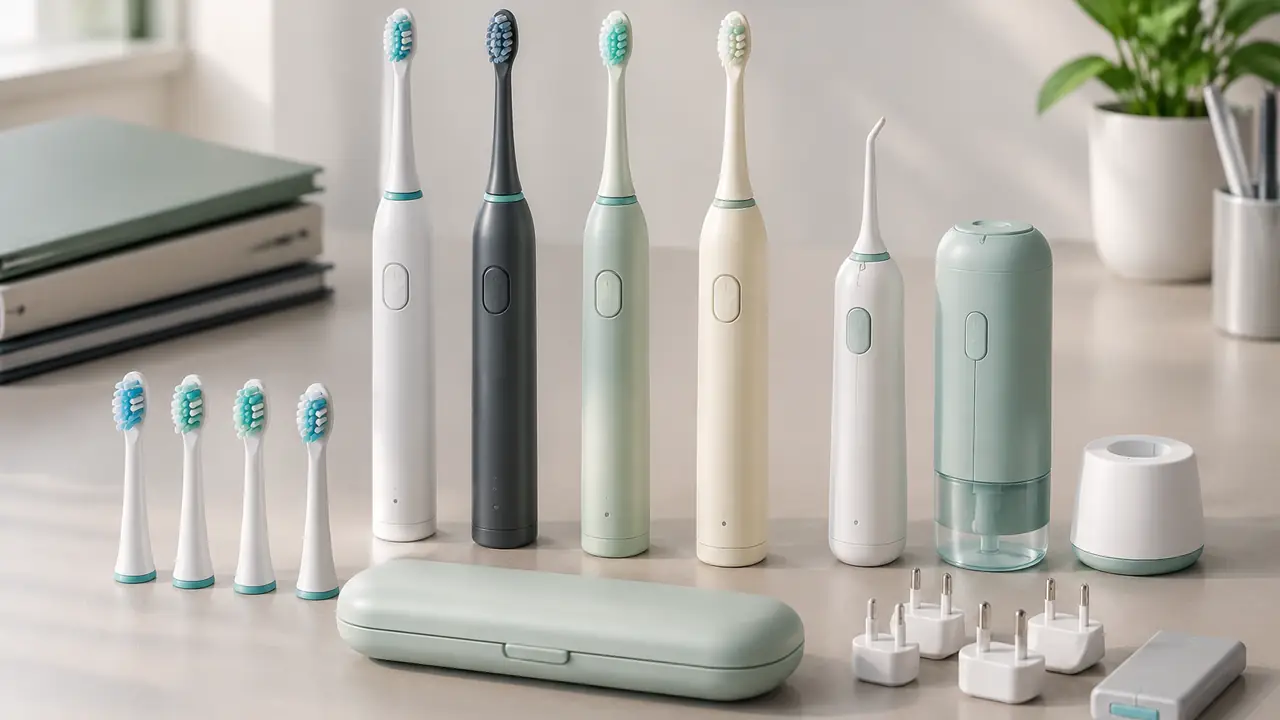
The route in one view
A toothbrush entering the United States carries a different stack from its EU sibling. Appliance safety runs on UL 859, the standard for household electric personal grooming appliances, evaluated by UL or by ETL rather than on the IEC text. The plant holds an FDA establishment registration, because electric toothbrushes are overseen as electric products - a facility-level layer, not a product approval. The lithium cell keeps its papers, UN 38.3 for transport and IEC 62133-2 for safety, attached to the cell model. Bluetooth models add FCC Part 15 for the radio. And the customs step is a broker conversation on codes and descriptions, with the declaration commonly read in the 8509.80 family. Around all of it sits freight: sea as the default lane, air under the airline rules for lithium batteries.
Two habits separate a smooth US program from a delayed one. The first is naming the layers early - the UL or ETL file is usually the long pole at a reference of about 4-8 weeks, so it starts while tooling and packaging move in parallel, not after them. The second is keeping statements factual: the US market has a culture of compliance review at retail that reads listings closely, and wording that drifts - approval language, treatment claims - costs more time than any document gap. The full market map is in the certifications checklist, and the European counterpart is in importing toothbrushes into the EU.
Safety: UL 859 via UL or ETL
The appliance layer is where the US differs most visibly. UL 859 evaluates the finished product - handle, dock and charging path as one system - against the expectations for household electric personal grooming appliances: enclosure and access, insulation, the charging circuit under normal and fault conditions, moisture behaviour, abnormal operation, and the markings and instructions that travel with the product. Evaluation is carried out by recognised laboratories whose marks - UL and ETL are the two a toothbrush program will usually meet - appear on the product. Reference timing in the desk's programs is about 4-8 weeks, confirmed per project, which is why the desk freezes the shell, dock and firmware choices before the file starts rather than mid-course. The standard itself is unpacked in the UL 859 and ETL note.
The FDA registration layer
The layer buyers most often get wrong is also the simplest. Electric toothbrushes are overseen in the US as electric products, and the regulatory record attached to that status sits with the manufacturing establishment: the plant holds an FDA establishment registration. The registration attaches to the facility, not to a model; it is a record that the plant exists and produces regulated products, and it is not a judgment on any design. The wording discipline follows directly - a toothbrush must not be described as approved by the FDA, and the factual sentence a listing may carry is that the manufacturing establishment holds an establishment registration. What the desk verifies at this layer is set out in the FDA registration note: the registered name and address against the plant that will actually produce the order, currency for the program, and consistency with order and shipping documents, all confirmed in writing.
Lithium, radio and materials papers
Rechargeable handles bring the cell papers into the US file unchanged: UN 38.3, the transport test series, and IEC 62133-2, the safety standard for lithium cells and packs in portable applications, both attached to the cell model rather than the toothbrush. They matter at booking time, because carriers and airlines rely on the transport documentation for any lithium-bearing order, and again in the vendor pack, where retail reviewers expect the cell papers beside the appliance file. Bluetooth models add FCC Part 15, the radio layer that clears the wireless function; the sequencing habit is the same as everywhere - frozen hardware and firmware, one set of engineering samples, no post-approval changes without a document check. Materials evidence closes the lane: RoHS is an EU regime, but US retail programs commonly ask for the same declarations as evidence, and the desk collects them per component family anyway because the supply chain's material answers should not depend on the destination. The layers are covered in the battery papers note and the radio note.
Freight and customs
Sea freight is the default for US toothbrush programs: reference transits run about 15-25 days to North America, with full and consolidated containers both in regular use, and air freight for lithium orders running on the airline rules for lithium batteries with UN 38.3 behind them. The customs step is a broker confirmation: the desk supplies plain descriptions by SKU family and the broker confirms the codes in writing - electric toothbrushes are commonly declared in the 8509.80 family of electro-mechanical domestic appliances, with US practice commonly reading the same line, while replacement heads may be read in that family or around the brush heading 9603 and the broker's answer governs the lane. Classification detail, including mixed shipments of handles and heads, is in the HS codes note, and the freight mechanics are on the logistics and shipping page.
The document pack, item by item
| Item | What it shows | Who provides it |
|---|---|---|
| UL 859 evaluation with the mark in place | Appliance safety for the North American market | Partner plant via UL or ETL |
| FDA establishment registration details | The producing facility and its standing | Partner plant, verified per project |
| UN 38.3 test summary and IEC 62133-2 report | Transport and safety coverage for the cell model | Cell maker, verified per project |
| FCC Part 15 file, Bluetooth models | Radio conformity for the finished product | Partner plant via the laboratory |
| Materials declarations | Restricted-substance answers per component family | Plant and component suppliers |
| Broker confirmation of codes | Classification per SKU family for the lane | Licensed customs broker, in writing |
| Artwork and marking proofs | Mark placement, identification, factual claim wording | Desk and plant, before print |
| Consistent invoice descriptions | SKU-level descriptions matching the codes | Desk with the plant |
How the desk runs the checklist
The US file rewards sequencing over speed. The desk's order of operations: fix the market list and feature set, freeze the design that will be tested, start the UL or ETL file, verify the plant's registration details in the same window, collect the cell and radio papers as their layers close, and hand the broker a clean pack before the container books. Sonicelle holds no certificates; partner plant documents are verified per project, the agreed pack is confirmed in writing for each program, and the goods themselves are checked against the file through testing and inspection before shipment. The regulatory context per market sits on the compliance and certifications page and in the long-form certifications guide; reference quantities, sample schedules and batch timing live on MOQ and lead time; and a US-market brief starts at the quote form with its market list attached.